
Choosing the right rash guard fabric can make or break your surfing experience. Polyester and nylon are the two most popular materials. But which one truly holds up against waves, sun, and salt? In this detailed guide, you’ll finally get your answer—and discover the perfect rash guard for your next surf session.
When it comes to selecting polyester vs nylon rash guards for surfing, polyester often takes the lead for durability and UV resistance, while nylon stands out for stretch and soft feel. Let’s dive into the details that could give you the comfort, longevity, and performance you need in your surf gear.
What are the key differences between polyester and nylon rash guards for surfing?
Polyester rash guards are known for their durability and sun protection, while nylon rash guards offer superior stretch and a softer feel. Both have unique advantages but cater to different surfing needs and styles.
When selecting a rash guard for your surfing sessions, understanding fabric differences matters. Polyester has strong UV resistance and doesn’t lose shape easily after repeated ocean exposure. It resists chlorine, dries quickly, and holds color longer under tough sun. On the other hand, nylon rash guards offer a more elastic fit, hugging the body and boosting movement flexibility. However, nylon tends to absorb more water, may dry slower, and can be slightly warmer.
Surfers who prioritize protection and longevity often lean toward polyester. But if maximum flexibility and comfort are your focus, nylon might be your pick. Each fabric’s qualities impact how you feel, move, and perform on the waves.
Which rash guard fabric offers better durability for surfing?
Polyester rash guards generally offer better durability than nylon, especially in saltwater environments. They withstand frequent exposure to sun, sand, and surf with minimal loss in form or color.
Durability is a serious consideration in surfing gear. Polyester fibers are tough against abrasion from surfboards and sand. Their chemical structure makes them highly resistant to UV rays, so they don’t break down quickly under harsh sunlight. Polyester also resists stretching out of shape over time, even after multiple washes or hours spent paddling through salt and sand. Nylon is stretchier but has a higher tendency to pill or wear thin at stress points, especially after constant movement or contact with surf wax. In short, polyester rash guards often outlast their nylon counterparts when used intensively in the surf.
How does each fabric perform in terms of comfort and flexibility?
Nylon rash guards typically feel softer and provide greater stretch, giving surfers a superior range of motion. Polyester is slightly less flexible but usually retains its shape longer with moderate comfort.
If unrestricted paddling and comfort are top priorities, nylon shines. Its silky texture feels gentle against the skin, and its natural elasticity allows the rash guard to move with your body. This makes nylon ideal for longer surf sessions where chafing and rash are concerns. Polyester, though less stretchy, remains comfortable for most surfers and resists bagging out. Some brands blend spandex or elastane with polyester to boost stretch. If you prefer a super-snug fit, nylon’s stretch will likely win you over. But if resilience and shape retention are key, polyester’s comfort will be enough for most surfers.
Which fabric offers superior sun protection while surfing?
Polyester rash guards consistently provide superior UV protection compared to nylon, often rated at UPF 50+ to block out most harmful UV rays during extended surf sessions.
Sun protection is critical for surfers spending hours in the lineup. Polyester’s tight weave and naturally high resistance to UV radiation make it the top contender. Most high-quality polyester rash guards are marketed with high UPF (Ultraviolet Protection Factor), giving broad-spectrum protection without relying solely on sunscreen. While nylon can also offer decent sun protection, it’s generally more porous and loses some effectiveness when stretched or wet. In the battle for sun defense, polyester is the safer bet—especially in tropical or high-UV zones.
How do polyester and nylon rash guards fare when wet?
Nylon rash guards absorb more water and take longer to dry, while polyester ones retain less water and dry quickly—helping surfers stay lighter and avoid chilling after leaving the water.
Water absorption affects both performance and comfort. Nylon soaks up more moisture, which can make the rash guard heavier and lead to that clammy feeling out of the surf. It also means slower drying on the beach or in between sessions. Polyester, on the other hand, is naturally hydrophobic. It sheds water quickly, helping keep your skin drier, reduce chafing, and maintain warmth in a breeze. This quick-dry quality is a major reason why polyester rash guards are favored for extended time in and out of the water.
What is the difference in longevity and color retention?
Polyester rash guards excel in maintaining color vibrancy and shape over time, even after frequent sun and saltwater exposure. Nylon may fade or stretch out faster, particularly if not rinsed after use.
With surfing, gear is constantly assaulted by salt, UV rays, and friction. Polyester manages these stresses with little visible wear for much longer than nylon. Its synthetic fibers resist fading and keep colors bold, even after dozens of surf sessions. The structure of polyester means it is less likely to become baggy, ensuring a good fit season after season. Nylon, while soft and flexible, is more prone to developing a worn look—especially if not washed or rinsed carefully after use. The extra effort needed to preserve nylon’s appearance is a key consideration for surfers who demand lasting performance from their rash guards.
Are there environmental impacts with polyester vs nylon rash guards for surfing?
Both polyester and nylon have notable environmental footprints, but recycled options are improving sustainability. Polyester is often more easily recycled and repurposed from post-consumer plastic bottles, reducing new resource extraction.
Surfers are increasingly mindful of ocean health and eco-friendly gear. Traditional polyester and nylon both rely on petrochemicals and energy-intensive manufacturing. However, recycled polyester (rPET) has become more popular, using discarded plastics as raw material. This helps reduce waste and lowers the overall carbon footprint. Nylon is harder to recycle and less commonly produced from post-consumer waste, though the industry is evolving. Choosing recycled rash guards—whichever fabric you pick—has a lower impact on the environment. Always look for brands that prioritize responsible sourcing and eco-conscious production methods for your next surfing rash guard.
Which fabric should you choose for your surfing rash guard?
If durability, quick-drying, and UV protection matter most, choose polyester. If you prioritize stretch, softness, and unrestricted motion, opt for nylon—ideally blended with spandex for active surfing.
Balancing personal comfort, climate, and wave intensity can guide your final decision. Some surfers prefer a snug, flexible nylon rash guard to maximize paddling range, especially in cooler or shaded conditions. Others value polyester’s resilience for repeated surf, sun, and salt exposure. Many premium brands now offer hybrid blends, combining both materials with spandex or elastane for the best of both worlds. Try on different types before buying, and always consider eco-friendly options for the health of our oceans.
Is there a perfect blend, and what do the pros use?
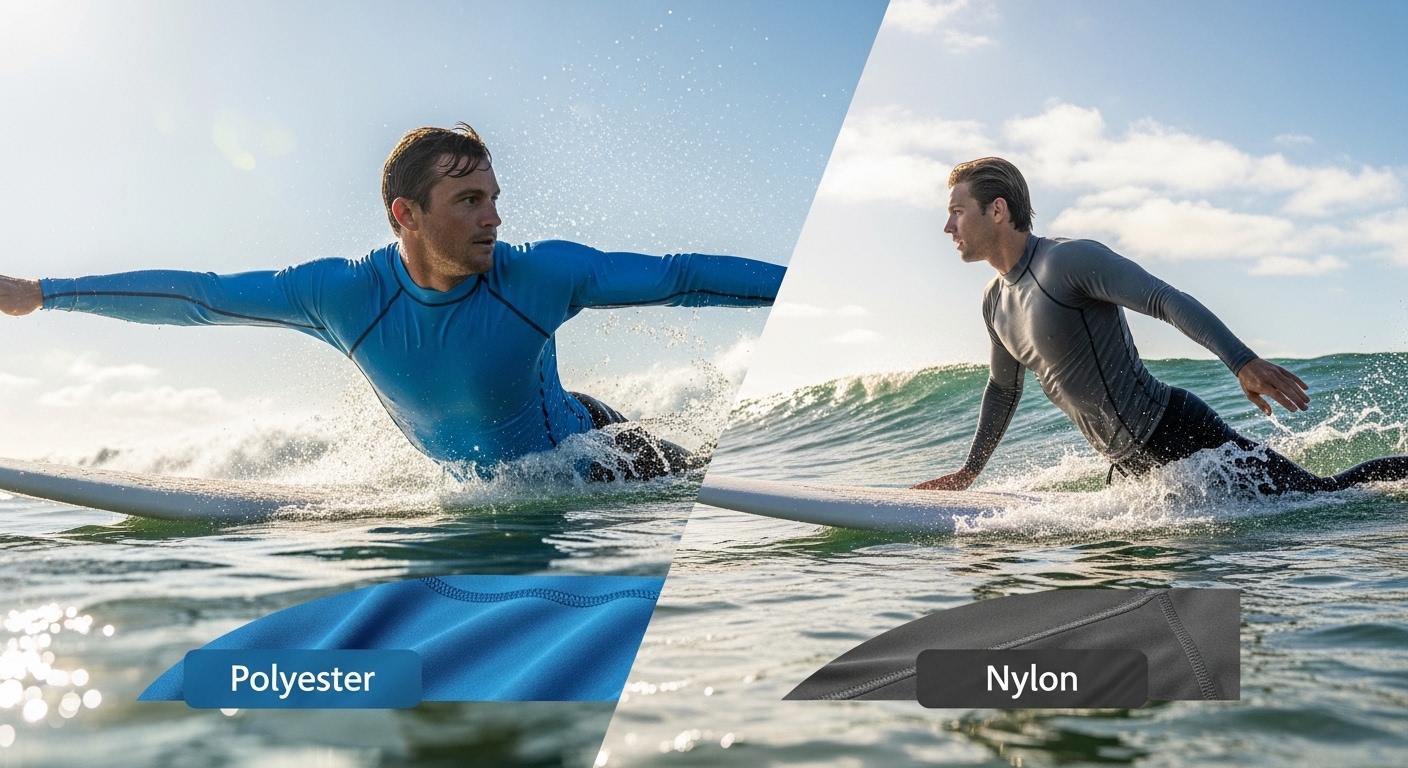
Many pro surfers opt for performance blends, using polyester or nylon mixed with spandex. This delivers a balanced combo of stretch, durability, quick dry, and sun protection for high-performance surfing.
The pros don’t always stick to a single material. Instead, they choose advanced fabric blends finely tuned for surfing. Blends of polyester and nylon with a small percentage of spandex or elastane provide both resilience and stretch. This hybrid approach means the rash guard hugs the body, moves naturally through every carve, and stands up to tough conditions. The blend also allows each surfer to tailor their rash guard to fit their specific needs—whether they’re chasing big waves, free surfing, or competing at the highest level. When in doubt, look for high-performance surf brands with a reputation among professional surfers.
| Feature | Polyester | Nylon |
|---|---|---|
| Durability | Excellent, resists wear and tear | Good, but may pill over time |
| Stretch & Flexibility | Moderate, holds shape well | Superior, very stretchy and comfortable |
| UV Protection | High, up to UPF 50+ | Moderate, less effective when stretched or wet |
| Quick Drying | Yes, dries quickly | Slow, retains water longer |
| Color Retention | Excellent, resists fading | Can fade faster, needs extra care |
| Environmental Impact | Improved with recycled options | Recycling options limited, less sustainable |
| Cost | Often more affordable | May be pricier due to stretch |
Top Benefits of Polyester Rash Guards for Surfing
- Long-lasting and highly durable
- Superior UV and sun protection
- Quick-drying and lightweight when wet
- Vivid, fade-resistant colors
- Suitable for eco-friendly, recycled options
Key Advantages of Nylon Rash Guards for Surfing
- Extremely soft and comfortable against the skin
- Best-in-class stretch for full mobility
- Flexible fit for active maneuvers and paddling
- Ideal for snug, athletic styles
Conclusion: What’s the Best Rash Guard Material for Surfing?
Both polyester and nylon rash guards excel in specific areas. Polyester is the champion for surfers needing tough UV protection and rapid drying, making it ideal for all-day surf adventures. Nylon, with its unrivaled stretch and silky-soft feel, fits those who want the most freedom of movement. Ultimately, the best choice depends on your priorities—durability or stretch, sun protection or comfort. Explore both, try them on, and invest in brands using recycled fabrics for a sustainable surf future. Ready to hit the waves? Choose your perfect fit and surf in confidence!
Looking to upgrade your surf gear? Check out our top-rated polyester and nylon rash guards now and ride the waves in style and comfort!
Frequently Asked Questions: Polyester vs Nylon Rash Guards Surfing
Which rash guard material lasts longer in saltwater?
Polyester usually outlasts nylon in saltwater. Its fibers resist degradation from salt and UV rays, maintaining shape and color after repeated ocean sessions. Nylon may stretch or wear thin faster if not rinsed thoroughly.
Are polyester rash guards more affordable than nylon?
Yes, polyester rash guards are often less expensive than high-stretch nylon options. This makes polyester a cost-effective option for frequent surfers who need reliable, long-lasting gear without breaking the bank.
Will nylon rash guards stretch out after repeated use?
Nylon is highly elastic, which is great for comfort. However, with constant pulling and movement, it can stretch out over time. Regular rinsing and air drying help prolong its shape and fit.
Do polyester rash guards feel stiff or rough on the skin?
Modern polyester rash guards are designed to be comfortable, but they can feel less soft than nylon at first. Many include blends with spandex or special finishing to boost softness and stretch, solving stiffness concerns.
Which fabric dries faster between sessions?
Polyester dries significantly faster than nylon. Its hydrophobic nature sheds water efficiently, meaning less time waiting between surf sessions and reduced risk of skin irritation from a soggy rash guard.
Are recycled versions of polyester or nylon rash guards available?
Recycled polyester rash guards are widely available from eco-conscious surf brands, made from things like plastic bottles. Recycled nylon is less common, but the industry is slowly ramping up efforts to offer greener nylon options too.
What’s the best rash guard fabric for warm-water surfing?
Polyester performs better in warm-water surfing due to its superior sun protection and rapid drying. If you want a lighter, cooler fit, polyester helps keep you protected and comfortable under intense heat and UV exposure.
Don’t Miss These Articles: Fishing Rod and Reel Combo Buying Guide for 2026
Up Next: How to Find Affordable Gucci Sunglasses for Women Without Compromising Style