
You have your rod, your reel, and a tackle box full of lures. But something feels missing when you hit the water. You watch the guy next to you land a trophy catch, weigh it on the spot, and log the data into his app. Meanwhile, you are left guessing the weight and missing out on key intel for next time. The problem is clear: a fishing rod alone does not make a kit. Without the right accessories, you are fishing blind. This guide will walk you through building a complete, perfect fishing gear kit that covers every scenario, focusing heavily on a critical tool you probably overlooked: a portable fish scale. We will cover exactly what you need, why you need it, and how to choose it so you never head out unprepared again.
What Are the Absolute Essentials in a Fishing Gear Kit?
The perfect fishing gear kit starts with three core categories: the capture system (rod, reel, line), the bite attractors (lures, baits), and the management tools (pliers, nets, scales). Most anglers focus only on the first two. The third category is what separates a hobbyist from a serious angler.
The Capture System: Rod, Reel, and Line
Your rod and reel combo must match your target species. A light spinning setup works for panfish and trout. A medium-heavy baitcasting combo is better for bass or pike. Pair this with a high-quality braided line for strength and sensitivity. Do not cheap out here. A weak line or poor drag ruins the day.
Bite Attractors: Lures and Terminal Tackle
Stock a variety of lures: soft plastics, crankbaits, spinnerbaits, and topwater poppers. Include hooks, swivels, and split rings in multiple sizes. Always carry a few packs of pre-rigged leaders for toothy fish. Keep at least two types of bait: one artificial and one natural (like worms or shrimp) for when the fish are picky.
The Management Tools: Scales, Pliers, and Nets
This is where most kits fail. You need a good pair of fishing pliers with line cutters, a landing net with a rubber mesh, and a reliable portable scale. Do not guess the weight of your catch. Guessing leads to inaccurate records and potential fines if you misreport. A quality scale solves this instantly.
Why Do You Need a Portable Fish Scale in Your Kit?
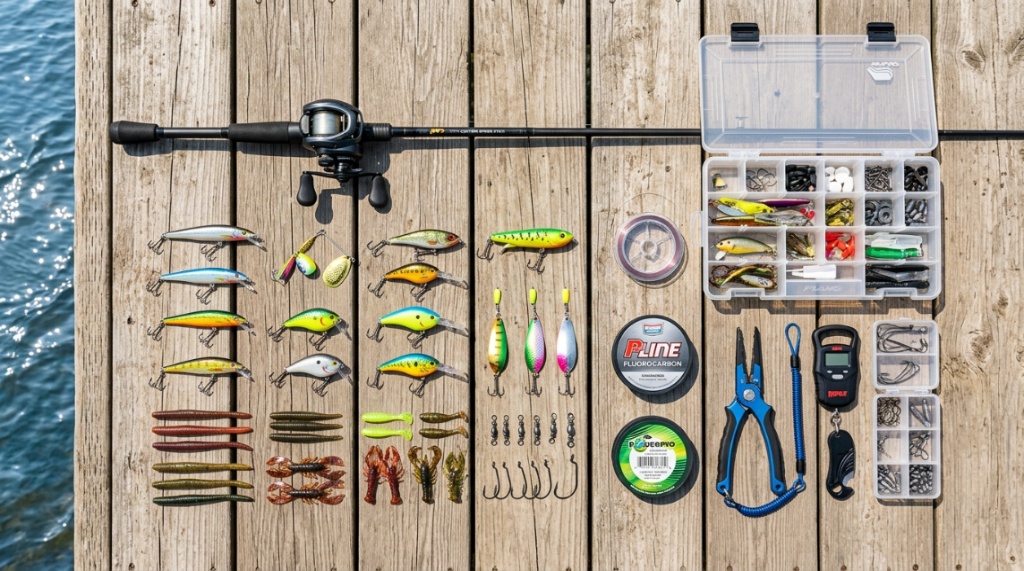
A portable fish scale is the single most underrated piece of fishing gear in existence. It provides accurate weight data for tournament entries, personal records, and conservation. Without it, you are just estimating, which is unreliable and unscientific.
Track Your Personal Records Accurately
Every angler claims to have caught a “ten-pounder.” Few can prove it. A portable scale gives you hard data. Log your catches by weight, date, location, and lure used. Over time, this data reveals patterns. You will know which lures work best at specific weights and which spots produce the biggest fish.
Comply with Local Regulations
Many states have strict slot limits and minimum weight requirements. A fish that looks like a keeper might be under the legal limit. Weighing it ensures you only keep what is legal. This protects fish populations and keeps you out of trouble with game wardens. It is a responsible angler’s best friend.
Improve Your Catch and Release Practices
Handling fish incorrectly can kill them. When you weigh a fish quickly and carefully, you minimize stress. You can weigh the fish in the water using a sling scale or cradling it in a wet net. This keeps the fish healthy and increases its survival rate after release.
How Do You Select the Best Portable Fish Scale for Your Needs?
Choosing a portable fish scale requires looking at four key factors: accuracy, weight capacity, durability, and ease of use. Do not just grab the cheapest option. A good scale is an investment in your fishing data.
Accuracy and Precision
Look for scales that measure in 0.1-ounce or 1-gram increments. The National Marine Manufacturers Association (NMMA) certification is a gold standard. Certified scales are tested for accuracy within a specific tolerance. For tournament fishing, an NMMA-certified scale is non-negotiable.
Weight Capacity and Materials
Choose a scale that handles 50% more than your typical catch. If you fish for bass, a 50-pound capacity is plenty. If you target tarpon or tuna, you need a 100-pound or 200-pound scale. The body should be made of corrosion-resistant materials like stainless steel or aircraft-grade aluminum.
Portability and Design
A true portable scale fits in your tackle box or pocket. Look for compact digital scales with a backlit display, a sturdy hook or clip, and a locking function that holds the weight reading after the fish stops moving. Some scales also offer Bluetooth connectivity for logging data straight to your phone.
Features That Matter
Digital versus spring scales: digital is more accurate and easier to read. Spring scales are mechanical and never need batteries. For most anglers, a digital scale with a tare function (to subtract the weight of the net or sling) is best. A built-in tape measure is also a bonus.
Which Type of Fish Scale is Most Reliable for Different Fishing Styles?
The best scale depends on where and how you fish. A kayak angler needs something different than a pier fisherman or a deep-sea charter captain. Matching the scale to the environment ensures you actually use it.
Best for Kayak and Shore Anglers
Portability is king. A small, submersible digital scale that clips to your belt or fits in a dry bag is ideal. Look for a scale with a wrist strap or carabiner. Avoid bulky units that will get in the way when paddling or walking the bank. A 50-pound capacity is more than enough.
Best for Inshore and Flats Fishing
Saltwater demands corrosion-proof materials. Look for a scale with a rubberized coating and stainless steel components. A scale with a built-in thermometer is helpful for monitoring water temperature, which affects fish behavior. A 100-pound capacity handles redfish, snook, and trout easily.
Best for Offshore and Big Game Fishing
Heavy-duty mechanical scales or high-capacity digital scales are required. You need a scale that can handle 200+ pounds and salt spray. Digital models with a remote display or submersible load cell are excellent because you can read the weight from a safe distance. A strong rope or chain attachment is essential.
How to Properly Use and Maintain a Portable Fish Scale
Even the best scale is useless if you do not use it correctly. Proper technique ensures accurate readings and prolongs the life of your device. Maintenance is simple but critical.
Step-by-Step Weighing Technique
First, wet your hands or a landing net. Hook the scale to the net handle or place the fish in a sling (never hook the fish through the mouth). Lift the fish gently, supporting the belly with your free hand. Wait for the reading to stabilize, then lock the display. Release the fish immediately.
Cleaning After Saltwater Use
Salt is the enemy of electronics. Rinse your scale with fresh water after every saltwater trip. Dry it with a soft cloth. Remove the battery and rinse the battery compartment if there is any salt residue. Apply a small amount of silicone lubricant to the hook pivot point to prevent corrosion.
Battery Care and Calibration
Check your scale’s battery before every trip. Digital scales drain batteries over time, even when off. Replace batteries yearly or when the display dims. Calibrate your scale monthly using a known weight (like a dumbbell or a bag of sugar). Most scales have a calibration mode.
What Other Accessories Complete a Fishing Gear Kit?
A scale is vital, but it is not the only accessory you need. A complete kit includes tools for cutting, gripping, measuring, and storing. These items work together to make every trip efficient and safe.
Cutting Tools: Line Scissors and Braid Cutters
Dull scissors shred braided line and fray your finger ends. Invest in tungsten carbide or ceramic line cutters. They stay sharp for years. Retractable models are convenient and prevent losing them in the bottom of your tackle box.
Gripping Tools: Fishing Pliers with Split Ring Openers
Good fishing pliers combine side cutters, a split ring opener, and a hook remover. Look for 6.5-inch pliers forged from corrosion-resistant steel. A split ring opener saves your fingernails and makes changing lures fast.
Measuring Devices: The Fishing Ruler
Combine your scale with a measuring board or stick-on ruler. Many portable scales now include a built-in ruler. A dedicated measuring board is better for accuracy, especially for trophy fish that need to meet minimum length requirements.
Storage Solutions: Tackle Bag and Scale Case
Keep your scale protected in a padded case or a pocket of your tackle bag. A hard case prevents accidental drops. The fishing gear accessories from certified suppliers offers cases that integrate directly with modular tackle systems, ensuring your scale stays safe and accessible.
How Does Your Fishing Environment Affect Your Gear Choices?
Your local water type, climate, and fish species directly dictate which gear you need. A kit built for freshwater bass fishing in a lake will not work for saltwater surf fishing in Florida. Tailor your accessories to the environment.
Freshwater Lakes and Ponds
Freshwater presents fewer corrosion issues. You can use less expensive gear, but you still need accuracy. A digital scale with a 50-pound capacity is perfect. Focus on lures that mimic local forage: crawfish, shad, and bluegill patterns. A lightweight landing net with a rubber mesh is best.
Saltwater Inshore and Estuaries
Saltwater is highly corrosive. You need stainless steel pliers, a corrosion-proof scale, and a sturdy net with a large hoop. Always wash gear immediately after use. A scale with a high IP rating (like IPX7 or higher) will survive accidental submersion.
Beach and Surf Fishing
Sand is abrasive and gets everywhere. Use a scale with a sealed display and a rubber gasket around the buttons. Keep your scale in a ziplock bag when not in use. A scale with a high capacity (100+ pounds) is useful for big rays, sharks, and drum.
Can You Build a Budget-Friendly Kit Without Sacrificing Quality?
Absolutely. You do not need to spend hundreds of dollars on premium accessories to build an effective kit. Prioritize the items that give you the most value for the lowest cost. Focus on accuracy and durability, not brand names.
Budget Priorities List
- High Priority: Portable digital scale, line cutters, fishing pliers
- Medium Priority: Measuring board, net with rubber mesh, leaders
- Low Priority: Bluetooth scales, specialized lure boxes, fish finders
Where to Save Money
Save on terminal tackle like hooks and swivels. Bulk packs are cheap and work fine. Save on lure storage by using cheap Plano boxes. Spend your money on the scale, pliers, and line. These are the tools that affect your catch success and safety.
Where to Invest
Invest in the scale. A cheap scale is often inaccurate and breaks quickly. Read reviews and look for a scale that offers NMMA certification, a long warranty, and solid customer support. Spending $30 to $50 today saves you from buying a replacement next season.
Before you pack your tackle box, you need to secure the backbone of your setup. Choosing the wrong setup can ruin a day on the water. Check out our comprehensive Fishing Rod and Reel Combo Buying Guide to find the perfect match for your target species.
When Should You Upgrade Your Fishing Gear Accessories?
Kits are meant to evolve. You do not need to upgrade everything at once. Upgrade when you notice a clear limitation or when your fishing style changes. Recognize the signs that your gear is holding you back.
Signs Your Scale Needs Replacing
If your scale shows inaccurate readings compared to a known weight, replace it. If the display is dim, buttons stick, or the hook is bent, it is time for a new one. A broken scale is worse than no scale because it gives false confidence.
Signs Your Pliers Are Failing
If the cutting blades no longer slice cleanly through braid, or if the hinge is loose, your pliers are failing. Rusted springs or stuck joints are safety hazards. Replace them with a corrosion-resistant model.
When to Add Specialized Tools
When you start targeting a new species, add specialized tools. If you switch to catfish, add a heavy-duty scale and a large net. If you start night fishing, add a headlamp and glow-in-the-dark accessories. Your kit should evolve with your goals.
Frequently Asked Questions
What is the best weight capacity for a portable fish scale?
For most freshwater fishing, a 50-pound capacity is ideal. For inshore saltwater, 100 pounds is better. Offshore anglers need 200 pounds or more. Always choose a capacity 50% higher than your typical catch.
How accurate are digital fish scales compared to spring scales?
Digital scales are generally more accurate, measuring within 0.1 ounces or 1 gram. Spring scales are less precise and can lose accuracy over time. Digital scales are recommended for tournament fishing where precision matters.
Can I use a regular kitchen scale for fishing?
No. Kitchen scales are not designed for outdoor conditions. They are not water-resistant, lack a locking function, and cannot handle the weight of a live fish. Always use a purpose-built portable fish scale.
Do I need a certified scale for fishing tournaments?
Yes, most competitive tournaments require NMMA-certified scales. Certification ensures the scale meets accuracy standards. Using a non-certified scale can result in disqualification. Check your tournament rules before purchasing.
How do I clean a fish scale after saltwater use?
Rinse the scale with fresh water immediately after use. Remove the battery and dry the compartment. Wipe down the body and hook with a soft cloth. Apply a light silicone spray to moving parts to prevent corrosion.
Can I weigh large fish without hurting them?
Yes. Use a wet landing net or a fish sling attached to the scale. Support the fish’s body weight with your hands while lifting. Do not lift large fish solely by the mouth or gills. Keep the fish in the water as much as possible.
Is a Bluetooth fish scale worth the extra money?
If you keep detailed logs of your catches, a Bluetooth scale is very useful. It automatically syncs weight, date, time, and location to your phone. For casual anglers, a standard digital scale is more than sufficient.