
You’ve finally found the perfect carrier—only to discover the waistband wraps around like a belt on a heavy coat, or the straps dig in with every step. If you’re above a size 14 or 16, shopping for a baby carrier often feels like a compromise between comfort and cost. The good news? You don’t have to choose. Finding the best plus size baby carrier budget is entirely possible when you know which measurements matter, which features are worth paying for, and which budget-friendly brands actually deliver on their promises. This guide will walk you through every step—from understanding sizing charts to testing carriers at home—so you can carry your little one close without breaking the bank or your back.
What Makes a Baby Carrier “Plus Size Friendly” in the First Place?
A plus size baby carrier is not simply a longer waist strap. It is a carrier designed with extended torso lengths, wider seat widths, reinforced stitching, and weight capacities that accommodate both parent and child safely. In fact, the industry standard for plus-size carriers typically begins at a waistband extension of 50 to 60 inches, but the best ones go beyond that. You need to look for three core features: an adjustable waistband that reaches at least 55 inches, shoulder straps that don’t compress your neck, and a seat that supports your baby’s hips without forcing you to hunch.
Waistband Measurement vs. Hip Measurement: Know the Difference
Many parents confuse waistband length with hip circumference. The waistband of a carrier sits on your natural waist or hips, depending on the style. To get the right fit, measure around the widest part of your hips and your natural waist. A carrier labeled “one size fits all” often maxes out at 45 inches, which excludes a large portion of plus-size parents. Look for explicit specifications in the product description—not vague claims—and always measure yourself first. A 55-inch waistband is the minimum threshold for a genuinely plus-size-friendly budget carrier.
Why Carrying Weight Capacity Matters More Than You Think
Most budget carriers are rated for 8–35 lbs, but that rating assumes the parent’s body weight is within a certain range. If you weigh more than 200 lbs, a carrier with a flimsy buckle or thin webbing may fail prematurely. The best budget carriers use metal buckles and bar-tacked stitching at stress points, even if they cost slightly more. Don’t compromise on hardware—check that the buckles are labeled as heavy-duty and that the fabric weight is at least 200-denier nylon or comparable.
Why Should You Trust Budget Carriers for Plus Size Bodies?
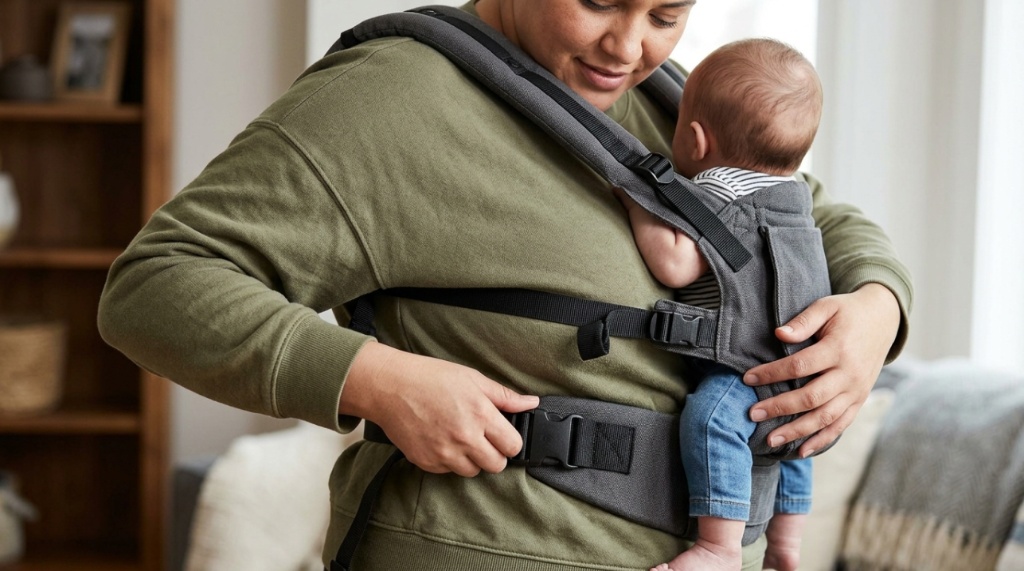
You might assume that a lower price tag means inferior quality, but that’s not automatically true. Many budget carriers (under $80) are manufactured in the same factories as premium brands, with the difference being marketing, packaging, and brand licensing. In fact, the current market offers several highly trusted budget carriers specifically engineered for plus-size parents, thanks to growing demand. The key is to read independent reviews and check for safety certifications like ASTM F2236, which ensures the carrier meets U.S. safety standards.
The Safety Certification You Should Never Skip
When buying a cheap carrier, look for the ASTM F2236 label or a CPSC compliance statement. This certification verifies that the carrier has been tested for structural integrity, buckle strength, and fabric tear resistance. Some imported carriers skip this certification to save costs, which is a red flag. If a carrier doesn’t list this certification, move on—even if the price is tempting. Safe doesn’t mean expensive, but it always means certified,If you are planning a trip soon, make sure to also check out our guide on best travel baby carrier for 2026.
Debunking the Myth of “Extended Size” Markings
Just because a carrier says “plus size” or “extended” doesn’t mean it actually fits well. Many brands slap on an extender strap and call it a day. A true plus-size carrier will have a wider torso panel, adjustable chest clip positions, and a seat that doesn’t pull your shoulders forward. Always look at videos or photos of real plus-size parents wearing the carrier—not just the model photos. Real-world testing reveals whether the carrier shifts fabric in weird ways or leaves red marks after 20 minutes.
How to Test a Budget Carrier for the Perfect Fit at Home?
You don’t need to visit a boutique to know if a carrier works. Once your carrier arrives, you can test it with a simple 15-minute routine that checks for the most common fit issues. Start by putting on the carrier with a clean, flat t-shirt. Adjust the waistband so it sits level—not tilted forward or backward. Then, put your baby in and walk around for at least 10 minutes. If you feel pinching, sliding, or pressure points, that’s your cue to adjust or return.
The “Two Fingers” Rule for Shoulder Straps
Slide two fingers under each shoulder strap. If you can’t fit them comfortably, the straps are too tight and may cause nerve compression. If you can fit your whole hand, the carrier is too loose and won’t support your baby’s weight properly. The straps should sit flat against your shoulders without digging into your armpits. This test takes 30 seconds but prevents hours of discomfort later.
Checking for Lower Back Support
Walk up and down stairs while wearing the carrier. A good budget carrier will keep your baby’s weight close to your center of gravity, not pulling you backward. If you feel a strain in your lower back after two minutes, the carrier lacks proper lumbar support. Some budget carriers have a removable lumbar pad that you can add later, so check if that’s an available accessory before making a purchase.
Which Budget Carrier Features Are Worth Paying Extra For?
When your budget is tight, you need to know where to splurge and where to save. The three features that absolutely justify paying a bit more are a padded waistband, a breathable mesh panel, and a hood or sunshade. These three add comfort, airflow, and protection without adding significant weight or bulk. Everything else—like multiple carry positions or toy loops—is a nice-to-have but not essential for a budget-friendly choice.
Why Breathability Is a Game-Changer for Plus Size Parents
If you’re plus size, you naturally generate more body heat. A carrier made of thick, non-breathable fabric will turn into a sweat trap within minutes. Look for carriers with a mesh insert or a cotton blend that wicks moisture. The ErgoBaby Adapt and the Lillebaby Complete are famous for this, but you can find budget versions like the Infantino Flip 4-in-1 that include mesh panels. Always check the fabric composition: 100% cotton is breathable but heavy, while a cotton-polyester blend holds less water.
The Hidden Value of a Detachable Hood
Many budget carriers under $50 lack a hood, but this simple add-on blocks sunlight and provides a place for a sleeping baby’s head to rest. It also protects against wind and light rain. If you have to choose between a carrier with a hood and one with extra storage pockets, pick the hood. You can always buy a separate diaper bag, but you can’t easily add a hood later.
Can You Find a Durable Plus Size Carrier Under $50?
Yes, absolutely. There is a narrow but real market of carriers under $50 that fit plus-size bodies and pass safety standards. Brands like Momcozy, Balboa Baby, and even some Graco models offer extended waistbands at entry-level prices. However, you’ll need to double-check the exact dimensions, because some brands only extend the waistband to 52 inches. If you wear a size 22 or above, you may need to look at the $60–$75 range for a truly comfortable fit.
Top 3 Budget Carriers That Actually Fit (Based on Real Parent Reviews)
From where we stand, the best budget carriers right now are the Infantino Flip 4-in-1 (waistband up to 56 inches), the Momcozy Baby Carrier (waistband up to 60 inches), and the Balboa Baby Sling (adjustable to 55 inches). Each one has its own quirk: the Infantino is narrow in the shoulders for some users, while the Momcozy has a wider seat panel. We recommend reading Amazon reviews sorted by “verified purchase” and filtering for reviews that mention your body type.
Why You Should Avoid “Off-Brand” Carriers from Amazon
It’s tempting to buy a $29 carrier from a random brand with generic product photos. Resist that urge. Many of these carriers use thin buckles that can snap under load, and they often lack the ASTM certification. A failed buckle while standing on a busy sidewalk is not worth the $20 savings. Stick with established brands or known budget lines from major manufacturers. If you are looking for a vetted list of options, see our curated guide on the best plus size baby carrier budget picks that are both safe and affordable.
How Much Should You Really Spend on a Plus Size Carrier?
A reasonable budget for a quality plus-size carrier is between $60 and $120. Below $60, you’ll find a few gems, but you’ll need to compromise on fabric quality or adjustability. Above $120, you’re mostly paying for brand names or extra features like lumbar supports and UV protection. For most families, the sweet spot lies in the $70–$90 range, where you can find a carrier that fits well, passes safety tests, and lasts for more than one baby.
The True Cost of a Poorly Fitting Carrier
A $40 carrier that gives you back pain might force you to buy a chiropractor session ($80), a massage ($60), or a second carrier ($50). Suddenly, your “bargain” cost $230. It’s important to think of a carrier as an investment in your physical health. For plus-size parents, the stakes are higher because joint strain and posture issues can be more severe. Spend a little more upfront to avoid these costs later.
When to Buy Used to Save Even More
If your budget is extremely tight, consider buying a used carrier from a local parent group or a website like Mercari or Poshmark. Many parents sell gently used carriers after using them for just a few months. Just be sure to wash thoroughly and check all straps and buckles for wear. A used carrier at half the retail price can be the best budget hack of all, as long as it meets safety standards and hasn’t been recalled.
What Mistakes Do Plus Size Parents Make When Buying a Carrier?
The most common mistake is buying a carrier based on “weight limit” alone, ignoring the waistband dimensions. Another mistake is assuming a carrier will stretch over time—it won’t. Fabric carriers don’t stretch in the waistband; they break or bruise. Finally, many parents overlook the importance of a crotch roll or infant insert, which changes how the carrier fits post-birth. Avoiding these pitfalls will save you time, money, and frustration.
Focusing Only on the Baby’s Weight
You might see a carrier that says “supports up to 40 lbs” and assume it will fit you. That 40 lbs refers to the baby’s weight, not the parent’s. The parent’s body dimensions are never mentioned on most labels. That’s why you must independently measure your hip and waist and compare them to the manufacturer’s size chart. Don’t fall for the “packaging trap.”
Skipping the Trial Period
Even with the best research, a carrier might feel different once you wear it for an hour. That’s why shopping from a retailer with a good return policy is crucial. Buy from places like Target, Amazon, or Buy Buy Baby (if still in your area) that allow returns within 30 days. Avoid final-sale clearance items until you’ve tested the carrier in a comparable model. Additionally, be sure to check the brand’s specific warranty—a 1-year warranty is standard, but some cheaper brands only offer 30 days, If you want a head start, check out our recommended options for a best plus size baby carrier budget that has been vetted for safety and comfort. Your back—and your baby—will thank you.
Is a Structured Carrier Better Than a Wrap for Plus Size Bodies?
For plus size parents, a structured carrier is usually the better choice over a stretchy wrap. Wraps require precise wrapping techniques that can be tricky with a larger torso, and the fabric often digs into the back. Structured carriers distribute weight more evenly across the hips and shoulders, which reduces strain. However, a ring sling is a good middle ground—it’s adjustable without buckles and works for many body types.
The Pros and Cons of Wraps vs. Structured Carriers
Wraps: Pro—very snug and customizable. Con—long learning curve, can be too hot, and may not provide enough support for heavier babies. Structured carriers: Pro—quick to put on, better weight distribution, and often have padded straps. Con—bulkier to carry and fit adjustments can be tricky. Ring slings: Pro—shoulder comfort and adjustability. Con—can cause shoulder strain if not positioned well. In short, structured carriers win for daily use.
How to Adjust a Structured Carrier for a Larger Torso
Start by attaching the waistband at your natural waist–not your hips–and tighten it until it’s snug. Then, adjust the shoulder straps so that the chest clip sits at your mid-chest level. If your torso is longer, you may need to cross the shoulder straps (like an X on your back) to prevent digging into your armpits. Many carriers allow this adjustment, so read the manual. A cross-back strap works wonders for plus size people with broader shoulders.
How to Maintain Your Plus Size Carrier to Make It Last Longer
Proper maintenance extends the life of your carrier and keeps it safe. After every trip, spot clean dirt and check the buckles for sand or debris. Wash the carrier in cold water on gentle cycle only if the label allows it, and never put it in the dryer—high heat degrades nylon fibers. Instead, hang it to dry in the shade. A well-maintained carrier can serve you through multiple children, making it even more budget-friendly.
Storing the Carrier Correctly Between Uses
Fold the carrier flat and store it in a dry, cool place away from direct sunlight. Don’t leave it scrunched up in the bottom of a diaper bag, as constant creasing wears down the fabric. Also, keep it away from pet claws. A small tear in the fabric can become a larger rip under load, creating a safety hazard. Take a minute to inspect the carrier monthly for loose threads or bent buckles.
When to Replace Your Carrier Even If It Looks Fine
If a buckle ever feels stiff or won’t snap securely, do not use the carrier with your baby inside. That’s a sign of fatigue in the plastic. Similarly, if you see any fraying on the webbing or a visible hole, stop using it immediately. The cost of a new carrier is negligible compared to the cost of a fall. Always order replacement buckles from the manufacturer if possible; don’t try to DIY with recycled parts.
Frequently Asked Questions
Can a plus size parent use the same carrier as a straight size parent?
Yes, but only if the carrier has an adjustable waistband that reaches your size. Many carriers are now designed with larger size ranges in mind, and some feature extenders. Always check the waistband measurement and the maximum hip width. If the carrier lacks that range, you’ll find it uncomfortable and insecure.
How do I measure my waist for a baby carrier waistband?
Use a soft tape measure and wrap it around your natural waist, which is usually an inch above your belly button. Then, measure the widest part of your hips. Compare both measurements to the manufacturer’s sizing chart. If you fall in between sizes, size up rather than down, since you can always tighten straps.
Are expensive carriers always better for plus size users?
No. Price does not guarantee fit. Some very expensive carriers max out at a 52-inch waistband, which excludes many plus-size parents. Conversely, some budget carriers like the Momcozy offer extended waistbands and decent padding. The best approach is to measure yourself and read reviews from parents with similar body types.
Can I use a baby wrap if I have a larger belly?
Yes, but it might be less comfortable. A stretchy wrap can be used, but you must be meticulous about the wrapping technique. A woven wrap is more supportive but more expensive. Many plus-size parents prefer structured carriers because they handle weight distribution more predictably.
Is it safe to wear a baby carrier while pregnant?
Yes, but with caution. As your belly grows, the waistband might fit differently. You can wear the carrier higher on your waist or use a belly band. Always check with your healthcare provider. Additionally, consider a prenatal-friendly carrier with a wide waistband that bypasses the belly.
How long can I wear my baby in a carrier each day?
Experts recommend no more than 2 to 3 hours at a time for newborns, with frequent breaks. For older babies, you can extend this, but take a break every hour to stretch your back and shift positions. Always listen to your body—if you feel numb or sore, it’s time to switch positions or take a rest.
What is the weight limit for a budget baby carrier?
Most budget carriers support babies from 8 to 35 lbs. However, the carrier’s weight limit is separate from the parent’s weight. As long as the carrier is structurally sound and certified, the parent’s weight doesn’t affect the carrier’s rated capacity. Ensure the floor weight is listed for your baby.
Conclusion
Finding the best plus size baby carrier on a budget is not a myth—it’s a matter of knowing your measurements, checking safety certifications, and ignoring marketing fluff. The right carrier will hug your body without digging, support your baby securely, and last through the toddler years. Start by measuring your waist and hips today, then use that number to shortlist only those carriers that explicitly list an extended size range. Remember, you don’t need to spend $200 to get a safe, comfortable carrier; you need to spend smartly on features that matter, like breathable fabric and strong buckles.