
Standing on the 12th tee at Chambers Bay, you watch the horizon turn from gray to charcoal. The wind shifts, and within minutes, a steady Pacific drizzle rolls in. If you’ve ever played a round in the Evergreen State, you know this scene well. The real challenge isn’t the rain itself—it’s having gear that lets you forget it’s raining. Waterproof claims mean little when you’re six hours from the clubhouse. This guide digs into the specific performance metrics, fabric technologies, and fit considerations that actually matter for Washington’s unique climate. We’ll help you find the best rain gear for golfers in Washington, so you can focus on your swing, not the forecast.
What Makes Washington’s Weather Unique for Golfers?
Washington isn’t just “wet.” It’s a study in microclimates. West of the Cascades, you face heavy, persistent rain with mild temperatures ranging from 40°F to 60°F. East of the mountains, you deal with colder, drier conditions but sudden, intense showers. This variance demands gear that handles both prolonged exposure and unexpected downpours.
Understanding the “Wet Bulb” Effect
In Washington, the air is often saturated. This means sweat doesn’t evaporate easily. If your rain jacket has poor breathability, you’ll end up soaked from the inside out—often worse than if you’d just worn a t-shirt. You need a fabric that actively pushes moisture out while blocking external water.
The Wind Factor in the Puget Sound
Wind-driven rain is the norm, not the exception. A jacket with a 10,000mm waterproof rating might fail against a 30mph gust that forces water through the zipper or seams. Look for garments with storm flaps, adjustable cuffs, and taped seams, not just high Hydrostatic Head numbers.
Temperature Variability: From Frost to Fog
A March morning in Spokane might see frost, while a November afternoon in Bellingham hits 55°F. Your rain gear must layer effectively. A bulky, insulated rain suit is useless in April. Breathable, packable shells that fit over a mid-layer offer the most versatility for Washington’s swinging thermometer.
Which Waterproofing Technology Actually Works Best?
Not all waterproofing is created equal. The industry standard is a combination of a waterproof membrane and a durable water repellent (DWR) coating on the exterior. However, the quality of the membrane and the type of DWR determine real-world performance.
Membrane Types: ePTFE vs. Polyurethane
ePTFE (expanded polytetrafluoroethylene) membranes, like Gore-Tex, offer better breathability per unit of waterproofing. Polyurethane (PU) coatings are cheaper but tend to degrade faster and feel stiffer. In Washington’s constant dampness, ePTFE is a better investment because it stays flexible and maintains breathability over time.
The DWR Dilemma: Why “Rejuvenating” Matters
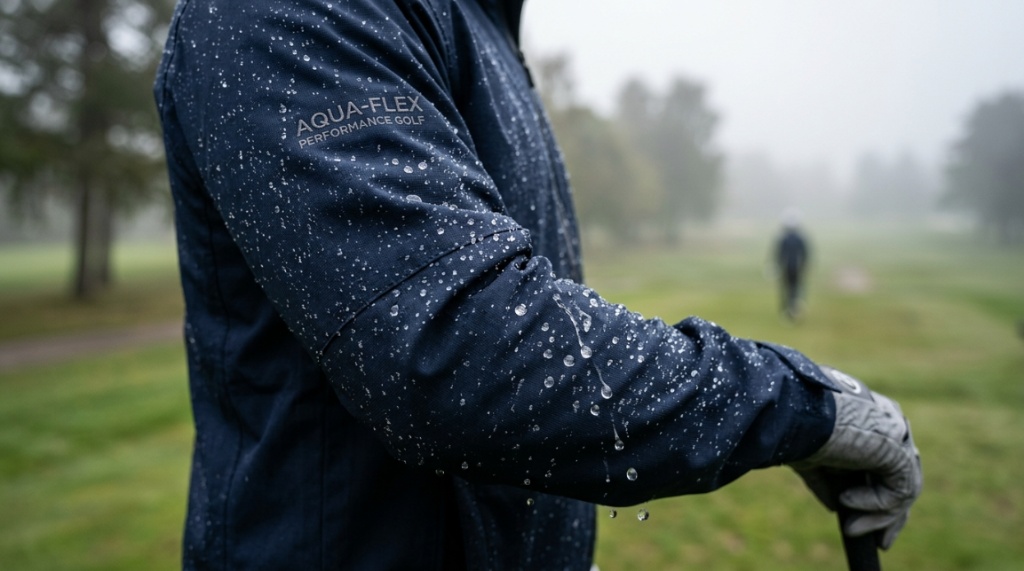
DWR causes water to bead up and roll off. When it fails, the outer fabric “wets out,” and the jacket feels heavy and cold, even if the membrane is still intact. You’ll need to re-apply DWR annually. Products like Nikwax TX.Direct are essential maintenance for any serious golfer.
Seam Sealing and Zipper Integrity
Water gets in through needle holes and zippers. Look for fully taped seams (not just critical seams) and waterproof zippers (like YKK AquaGuard). Pockets are a weak point. Ensure they have waterproof zippers, or be prepared to keep your phone in a dry bag inside your pocket.
How Should Rain Gear Fit for a Golf Swing?
Standard rain gear fits like a trash bag—constricting and loud. Golf rain gear must have room in the shoulders and biceps, with a longer sleeve length to accommodate the extension of your swing. If the jacket binds at the top of your backswing, you’re losing distance and accuracy.
Articulated Sleeves and Gusseted Underarms
These features allow your arms to move freely without lifting the jacket’s hem. When you reach the top of your swing, your lower back shouldn’t be exposed. Articulated sleeves follow the natural curve of your arms, preventing the fabric from pulling against your wrists.
Adjustable Hem and Cuffs for a “Dry” Seal
A drawcord hem keeps the jacket from riding up. Velcro cuffs should close snug enough to prevent water entry but loose enough to allow air circulation. This is critical when playing in a steady drizzle—a loose cuff acts like a funnel, channeling water directly onto your sleeve.
Pant Fit: The “Bib” Advantage
Rain pants come in two styles: pull-on and bib. Bibs (overall-style) offer superior protection because they overlap with your jacket. They prevent the dreaded “gap” when you bend over to pick up a ball or place a tee. For Washington’s sideways rain, bibs are the pragmatic choice.
Is Breathability More Important Than Waterproofing?
Yes, for Washington specifically. A fully waterproof but non-breathable suit will cause you to overheat and sweat, leading to hypothermia when you stop moving. The goal is a balance: a waterproof rating of at least 10,000mm and a breathability rating of at least 15,000g/m²/24h.
The RET Value: A Deeper Dive
RET (Resistance to Evaporative Heat Transfer) is a lab test that measures breathability. A RET value below 6 is highly breathable. Between 6-12 is good. Above 12 is poor. Many budget jackets don’t publish RET values, which is a red flag. Look for brands that are transparent about this metric.
Pit Zips: Your Best Friend
Long zippers under the armpits allow rapid heat venting without exposing your core to rain. In Washington’s 50°F weather, pit zips let you walk up a hill comfortably without stopping to remove layers. This simple feature dramatically improves comfort.
Materials That Breathe: The Role of Polyester vs. Nylon
Nylon is stronger and more tear-resistant but can be less breathable than polyester. Polyester has better wicking properties. Many premium jackets use a nylon face with a polyester backing or a knit liner to improve moisture transport. Prioritize a knit backer for next-to-skin comfort.
What Features Should You Look for in a Golf Rain Jacket?
Beyond waterproofing, specific golf-centric features elevate a jacket from “acceptable” to “essential.” These include magnetic closures (for easy access), a hidden towel attachment loop, and a structured collar that stays upright without scratching your chin during your swing.
Magnetic Closures vs. Snaps & Buttons
Snaps and buttons are slow and can be hard to handle with cold, wet fingers. Magnetic closures allow one-handed access to your pockets, which is useful when holding an umbrella or a club. They also spare you from the painful “snap to the knuckle” incident.
Lightweight vs. Durable Shells
There’s a trade-off here. A 2.5-layer jacket is lightweight and packable but less durable. A 3-layer jacket is sturdier and more breathable but heavier. For Washington golfers, a 3-layer jacket is the better choice because you’ll often wear it for 5+ hours in tough conditions.
The “Caddy” Pockets
High chest pockets that sit above the hip line are ideal. They allow access to your scorecard or tees even when wearing a hip wader or a thick base layer. A magnetically closed chest pocket is a premium touch that adds daily usability.
Which Rain Pant Style Is Best for the Pacific Northwest?
In the PNW, the choice is clear: bibs are superior to waist pants. The extra chest protection prevents water from seeping down when you’re caught in a downpour without an umbrella. Waist pants often leak at the waistband because they rub against your base layer.
The Ankle Adjustment: Zippers vs. Snaps
Full-length side zippers on rain pants are a game-changer. They allow you to put on or remove pants without removing your golf shoes. Look for zippers that open from both the top and bottom, so you can adjust the fit over your shoe without creating a gap for water to enter.
Bottom Hem Design
The hem should have a shock cord or a stirrup. A stirrup keeps the pant leg down over your shoe, preventing water from running into your foot. A shock cord lets you cinch the hem tight against your ankle but can be uncomfortable under a boot. Stirrups are more effective for playing golf.
Insulated vs. Non-Insulated Pants
For Washington’s late fall and winter, a lightly insulated pant (with a fleece backer) can be ideal. However, for spring and summer, non-insulated pants are more versatile. For maximum utility, buy a shell pant and invest in quality thermal base layers underneath.
How Do You Layer Rain Gear for Maximum Comfort?
The key is a “system,” not a single garment. You need a moisture-wicking base layer, a warming mid-layer, and a protective outer shell. The mid-layer is where golfers often go wrong—cotton hoodies are a death sentence in Washington rain.
The Base Layer: Merino Wool vs. Synthetics
Merino wool regulates temperature better and resists odors, but it’s slower to dry than some synthetics. A high-quality polyester or nylon base layer is lighter and dries faster. For chilly, damp rounds, a lightweight Merino blend is the best compromise.
The Mid-Layer: The Thermal “Engine”
Choose a grid-fleece or a lightweight down (with a water-resistant shell) for this layer. Avoid bulky fleece—it traps too much heat and restricts movement. The purpose of the mid-layer is to trap warm air created by your body, not to add bulk.
The Shell: The Final Barrier
Your rain jacket is the shell. It should fit over your mid-layer without being tight. A “relaxed” fit is better than a “performance” fit for golf. You need to be able to swing freely without the jacket riding up. Ensure the sleeves are long enough to cover your wrists even when extended.
When Should You Buy Rain Gear for Washington Golf?
Timing affects price and selection. The best time to buy is late spring or early summer. Retailers are clearing out winter inventory. However, if you need gear for an upcoming trip, buying in September gives you the newest tech for the fall season, If your weekend plans involve trading the links for a day on the water instead, make sure you Build the Perfect Fishing Gear Kit with Essential Accessories before heading out.
Seasonal Sales and Clearance
Look for deals at the end of March and April. This is when stores push out last season’s rain gear to make room for summer apparel. However, sizes and colors are limited. You might find a great deal, but you might not find your size.
Testing Gear Locally vs. Online
If you live in Washington, try the gear on in a store. Swing a club in the fitting room. Test the arm reach. Online reviews are helpful, but fit is critically important for golf rain gear. If buying online, ensure there’s a generous return policy.
The “Shower Test” at Home
Once you buy gear, test it at home. Wear it under a warm shower for 5 minutes. Check for leaks at the seams, cuffs, and collar. If it leaks in your shower, it will leak on the course. It’s better to discover this at home than on the first tee.
Can You Rely on Umbrellas and Cart Covers Instead?
Umbrellas and cart covers are helpful accessories, but they are not substitutes for quality rain gear. Wind makes umbrellas unwieldy. Cart covers can protect your clubs but do nothing for you when you’re walking to your ball. Your gear is your primary defense.
The Limits of an Umbrella
An umbrella provides coverage only when you’re standing still. It fails during putting or chipping. It also interferes with your swing if you’re trying to use it while hitting. A good quality rain suit gives you hands-free freedom.
Cart Covers: Protection for Your Clubs, Not You
Cart covers keep your grips dry, which is beneficial. They are essential for long rounds in the rain. However, they don’t help with the 400-yard walk up the fairway. You still need a jacket and pants that can handle direct exposure.
Towels and Gloves: The Final Line
Use a large, moisture-wicking golf towel clipped to your bag. Wear rain gloves (all-weather gloves) instead of regular leather gloves—they have better grip when wet. Keep an extra pair in a sealed dry bag. This completes your “wet weather survival kit.”
Frequently Asked Questions
Is Gore-Tex worth the extra money for golf rain gear?
Yes, for Washington conditions. Gore-Tex offers superior breathability and durability compared to standard PU coatings. It keeps you comfortable during high-exertion activities like walking and swinging. The investment is justified if you play 20+ plus rounds per year in wet weather.
Can I use a regular waterproof jacket for golf?
Yes, but it will likely restrict your swing. Golf jackets have specialized cuts with extra room in the shoulders and back. Standard jackets are tighter and may not allow for a full turn. Also, golf jackets have features like magnetic pockets and towel clips.
How often should I re-waterproof my golf rain jacket?
You should re-apply DWR every 2-3 months if you play regularly. Also, re-apply after washing it. If water no longer beads up on the surface, it’s time to apply a new DWR treatment. Washing with technical detergents helps maintain performance.
What’s the best way to dry golf rain gear?
Hang it to dry at room temperature. Do not use a tumble dryer unless the manufacturer specifies it’s safe. High heat can damage the membrane and seam tape. Always follow the care tag instructions for the best results.
Do I need rain gloves in Washington?
Yes, absolutely. Leather gloves become slippery when wet. Rain gloves (made of synthetic materials) provide better grip in wet conditions. They are essential for maintaining a consistent swing during a downpour.
Should I buy a rain suit or just a jacket?
You should buy a full suit (jacket and pants). A jacket only protects your upper body. Rain pants are crucial for staying dry and comfortable in a round that lasts several hours. Wearing wet jeans or pants is miserable and chafing.
Are “breathable” rain jackets truly breathable?
Yes, but with limits. Breathability is a relative term. No fabric is as breathable as a simple mesh shirt. However, a good breathable rain jacket will let sweat vapor escape while blocking rain drops, keeping you much drier than a non-breathable vinyl jacket.
Conclusion
Picking the best rain gear for golfers in Washington isn’t a matter of buying the most expensive jacket. It’s about understanding the climate, the fit requirements for a golf swing, and the fabric technologies that keep you dry without turning you into a sauna. Focus on fully taped seams, adjustable cuffs and hems, articulated sleeves, and a breathable membrane like ePTFE. Remember, bib pants are your friend in this part of the country. Your gear is the difference between a great round in the mist and a miserable day in the rain. Make the investment wisely, and the “wet coast” will never keep you off the course. Get ready to embrace the elements—your game will thank you.