
You know the feeling—you’re hiking a mile down a rocky trail to your favorite spot, and your shoulder is screaming because that old tackle bag is digging in. Or worse, you finally get to the water, only to realize you left your favorite lure back in the truck. If you’re an angler who moves, wades, or banks, a standard tackle box just doesn’t cut it anymore. You need a fishing backpack with tackle boxes to keep your gear organized, portable, and ready for action. That’s why we’re here—to break down exactly how to pick the best one so you can spend more time casting and less time struggling.
In this article, we’re going to give you the real-world guidance you need to make a smart purchase. We’ll cover everything from sizing and storage to durability and comfort. Whether you’re a weekend warrior or a tournament angler, you’re about to learn exactly what to look for in a fishing backpack that’s more than just a bag—it’s your mobile command center. We’ll also look at how to match your backpack to your specific fishing style, ensuring you never have to leave essential gear behind again. By the end, you’ll be armed with the knowledge to choose the perfect pack that will last for seasons to come.
What is a Fishing Backpack with Tackle Boxes?
A fishing backpack with tackle boxes is a specialized hybrid pack that combines the load-bearing comfort of a backpack with the organizational precision of traditional tackle storage. Instead of carrying a heavy box in one hand, you get a hands-free solution where modular trays and boxes fit securely inside the pack, allowing you to carry rods, reels, and all your terminal tackle in one place.
These backpacks are designed to solve a fundamental problem for modern anglers: versatility. They are not just a single box; they are a system. The bags typically feature a main compartment that houses removable tackle trays, plus additional pockets for pliers, line, and personal items. The best part is the scalability—you can swap out the tackle trays depending on what species you are targeting. If you’re chasing bass on a Saturday and trout on Sunday, you don’t need a different bag; you just need different trays. This versatility is why they’ve become the gold standard for anglers who value efficiency and organization.
The Core Components of a Quality Pack
When you open up a quality fishing backpack, you’ll find several key components. First, there is the tackle management system—usually 2-4 removable plastic trays with adjustable dividers. Second, there is the storage area for larger items like rain gear or a hydration bladder. Third, look for tool attachment points, such as loops for pliers or clips for a net. These elements work together to ensure every piece of gear has a dedicated home, which speeds up your setup time on the water significantly.
How It Differs from Standard Tackle Boxes
Unlike a standard tackle box, which relies on a stiff shell and a handle, a backpack distributes weight evenly across your back and shoulders. This makes it far superior for long walks, kayak launches, or any scenario where you need your hands free to navigate tricky terrain. While a classic box offers rigid protection, the backpack offers superior comfort and mobility. Furthermore, backpacks allow for vertical organization, meaning you can find your gear at a glance instead of digging through a bottomless abyss.
Why Choose a Backpack Over a Traditional Tackle Box?
You should choose a backpack over a traditional tackle box primarily for comfort and mobility. If you are moving any distance—whether it’s 50 yards or 5 miles—a backpack takes the strain off your hands and puts it on your back, which is a far more efficient way to carry weight. This allows for longer, more productive fishing trips without the fatigue that comes from lugging a hard case around.
Beyond just comfort, it’s about versatility in the field. Consider a kayak trip or a hike to a backcountry pond—places where a bulky, hard-sided box is awkward and often impossible to transport. A backpack fits easily on your back, freeing your hands for climbing, paddling, or carrying a rod. This adaptability makes them incredibly practical. Moreover, modern packs are designed to be virtually weatherproof, so your gear stays dry even if you get caught in a sudden downpour. This combination of ergonomics and utility makes the backpack a superior choice for the modern, mobile angler.
The Ergonomics of Carrying Heavy Loads
Carrying 20 pounds of tackle on your shoulders is much easier than carrying it in your hand. The human body is designed to carry weight close to the spine, so a backpack with a supportive waist belt transfers the load from your shoulders to your hips. This dramatically reduces fatigue and allows you to hike longer and fish harder. Good backpacks also feature breathable back panels to reduce sweating on hot summer days, keeping you comfortable from the first cast to the last.
Hands-Free Convenience in the Field
Imagine navigating a slippery bank or climbing over a fallen tree. With a traditional box, you’re juggling a heavy object in one hand and your rod in the other—a recipe for a spill. A fishing backpack with tackle boxes gives you complete freedom. This hands-free design is crucial for safety and convenience, letting you focus entirely on your surroundings and your angling technique.
How Big of a Backpack Do You Need?
The size of the backpack you need depends entirely on how much tackle you require and how long you plan to be out. As a general rule, anglers should look for packs between 20 and 40 liters in capacity. A 20-liter pack is great for ultralight fishing or a day trip where you only need a few trays. A 40-liter pack is better suited for multi-day trips or those who like to carry a variety of lures for different conditions.
Choosing the right size is a balance between carrying what you need and not overburdening yourself. If you are a bank angler who likes to travel light, a smaller pack is your best bet. However, if you’re a kayak angler who needs to store a waterproof camera, extra line, and multiple boxes of plastics, you will likely need a larger model. The key is to list your “must-haves” and then select a pack that fits those items with a little room to spare, rather than buying the biggest one on the shelf and filling it with junk you’ll never use.
Day Trip vs. Multi-Day Expeditions
For a standard day trip, a 20-30 liter pack is usually sufficient. This size will hold 2-4 tackle trays, a light rain jacket, a snack, and a water bottle. For multi-day or overnight expeditions, you need a pack closer to 35-50 liters. These larger packs often come with separate compartments for a hydration bladder and sleeping gear, transforming your fishing pack into a full hiking pack.
Matching Capacity to Your Fishing Style
Your target species should dictate your pack size. If you fish for trout with small spinners and float gear, a compact pack will do. If you bass fish with heavy jigs, soft plastics, and crankbaits, you’ll need bigger trays and more space. Match the backpack’s capacity to the volume and size of the lures you primarily use. For example, large swimbaits require deep trays, which many standard backpacks cannot accommodate, so always check the tray dimensions before you buy.
Which Material is Best for a Fishing Backpack?
The best materials for a fishing backpack are waterproof or highly water-resistant fabrics like heavy-duty nylon, ripstop polyester, or TPU-coated tarpaulin. These materials protect your valuable tackle from rain, splashes, and accidental submersion. You want a fabric with a high denier rating (e.g., 600D or 1000D) for durability against abrasions from rocks and boat surfaces.
Durability and water protection are non-negotiable when it comes to fishing gear. Flimsy materials will rip easily on branch snags or sharp hooks, and non-waterproof zippers are a fast path to rusted hooks and destroyed tackle. A quality pack will use sealed seams and water-resistant zippers to keep moisture out. Some of the most premium packs even offer a “roll-top” closure, which creates a watertight seal that is perfect for kayakers or wade fishermen who frequently operate in wet environments.
Comparing Nylon, Polyester, and TPU
Nylon is often the go-to because it’s incredibly strong and abrasion-resistant. Polyester is similar but slightly less durable and more prone to UV degradation. TPU (Thermoplastic Polyurethane) is the heavy hitter—it is completely waterproof and incredibly tough, making it ideal for extreme conditions, though it is often heavier and less flexible than fabric options. For most anglers, a high-quality nylon pack with a waterproof lining offers the perfect balance of weight, durability, and cost.
The Importance of Rustproof Zippers
Saltwater and freshwater are enemies of metal. Standard zippers will corrode and seize up quickly in a fishing environment. Look for packs that boast corrosion-proof zippers, often made with nylon or coated plastic components. These are smooth-operating and will never rust, ensuring your pack stays functional for years even with constant exposure to wet gear. Always check the zipper pull tabs as well; they should be easy to grab even with wet, slippery hands.
How Do You Organize a Fishing Backpack Efficiently?
Organizing a fishing backpack efficiently is about categorizing your gear by function and frequency of use. You should place the items you use most often—like pliers, line nippers, and your most productive lures—in quick-access exterior pockets. Items you rarely use, like extra reels or bulk packages of soft plastics, should be stored in the main compartment or lower sections of the pack.
An efficient system saves you time and prevents frustration on the water. If you have to rummage through every pocket to find a hook, you’re losing fishing time. A good rule of thumb is the “one-touch” rule: if you can’t grab an essential tool with one hand while looking at the water, it’s in the wrong place. Use the removable trays to sort by lure type (topwater, crankbaits, jigs) and label them if necessary. Keep your terminal tackle (hooks, weights, swivels) in a separate small organizer to avoid tangling.
Strategic Placement of Essential Tools
High-quality backpacks have designated loops and pockets for tools. Always use these for your pliers and hook removers. Place them on the exterior or in the top flap so they are immediately accessible. Similarly, keep your sunscreen and insect repellent in side pockets so you don’t have to dig through your tackle trays to get them. This reduces the risk of tipping your trays over and spilling everything onto the ground.
Utilizing Modular Tray Systems
Take advantage of the modular nature of these packs. Instead of one giant box, use several medium trays. This allows you to swap out the entire tray when you change fishing locations. For example, have one tray for nightcrawlers and bottom rigs, and another for topwater frogs. This modularity extends the functionality of your pack and keeps your gear hyper-organized. Furthermore, you can take a tray out for bank fishing and leave the heavy pack at the truck, allowing you to wade lighter.
What Features Should You Look for in a Premium Backpack?
When buying a premium backpack, look for rod holders, integrated hard-shell cases, and ergonomic suspension systems. Rod holders are crucial for hands-free transport—they allow you to strap one or two rods to the sides of the pack. Integrated hard-shell cases protect your most sensitive electronics (like a fish finder) or fragile lures. An ergonomic suspension system, which includes padded shoulder straps and a sternum strap, is a sign of a premium product.
You also want to look at the “little” things that make a big difference. Cup holders, loop systems for tools, and even built-in cutting boards or weigh scales are features that elevate the best backpacks above the rest. Check the base of the pack—a durable, waterproof base means you can set it down in the mud or wet boat deck without fear. Also, inspect the stitching and the attachment points for the buckles; double-stitched seams with bar-tacking at stress points are the hallmark of a pack that will stand up to heavy use.
Integrated Rod Holders and Lash Points
If you are walking to a spot, you need your hands free but you also need your rods. Look for packs with side compression straps that can securely hold a rod tube or an actual rod. This feature is essential for kayak anglers or hikers. Lash points (small loops) on the outside are also useful for strapping on a net or a wading staff, ensuring your pack can carry more than just what fits inside.
Comfort-First Design Elements
Look for adjustable torso lengths and sternum straps that adapt to your body type for a custom fit. Ventilated back panels are critical for air flow. While it sounds simple, the difference between a sweaty back and a comfortable one can ruin a trip. A good waist belt also takes pressure off your spine. High-end packs use memory foam and mesh materials to provide both cushioning and breathability.
When Is the Best Time to Replace Your Old Backpack?
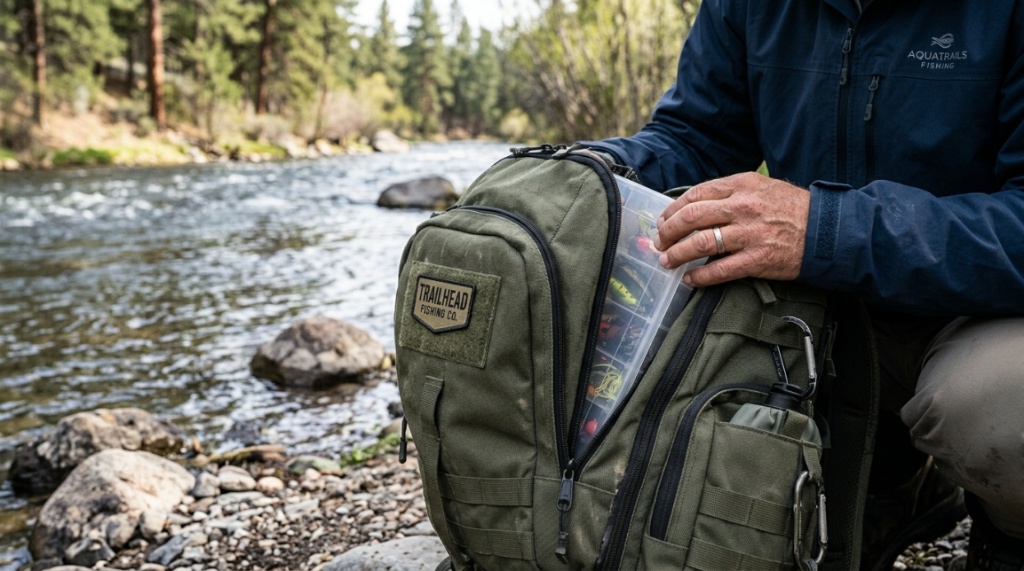
The best time to replace your old fishing backpack is when you notice failed zippers, torn seams, or water leakage. These are clear signs that the pack has reached the end of its functional life. Additionally, if your back is sore after a day out, or you find yourself constantly fighting with the bag to get your gear out, it’s time for an upgrade. The cost of replacing broken gear that got wet is usually higher than the cost of a new pack.
It is time to upgrade when your fishing style evolves, too. If you’ve bought new larger reels or started using heavier lures, your old pack might not accommodate the new gear. Upgrading isn’t just about wear and tear; it’s about improving your efficiency. A modern pack with better organization systems can actually make you a better angler by giving you quicker access to the right tackle at the right time, without distraction.
Signs of Wear and Tear to Watch For
Regularly inspect your pack for frayed straps, cracked buckles, and thinning fabric at the corners. These are stress points that will fail at the worst possible moment. If your zippers are skipping or require forceful pulling, they are likely filled with grit or the teeth are misaligned, which rarely gets better over time. Don’t wait for a catastrophic failure—replace it when you see these early signs.
When Your Gear Outgrows the Bag
If you are carrying bags full of tackle in your trunk because they don’t fit in your main pack, you’ve outgrown it. Your backpack should be your primary home for your most-used tackle. If you are constantly leaving essentials at home because they don’t fit, you need a larger or more configurable model. Upgrading to a pack with more trays can consolidate all your loose boxes into one secure unit.
Can a Backpack Protect Delicate Fishing Electronics?
Yes, but only if you choose a pack with dedicated padded compartments or an integrated hard-shell case. Fish finders, portable sonar units, and expensive cameras rely on shock absorption and water protection. A simple cloth pocket will not suffice. You must look for a pack that has a “laptop-style” sleeve or a rigid insert to protect these devices from impacts.
Protecting your electronics is critical in the marine environment. Water and hard knocks are the two main threats to gear. The best backpacks feature a “lid” compartment that is padded and isolated from the main tackle area, providing a safe haven for a fish finder or digital scale. However, even with a waterproof pack, it’s wise to put your electronics in a separate dry bag for double protection, especially if you are on a kayak where water can splash over the deck frequently.
The Role of Padded Laptop Sleeves
They act as a shock absorber, cradling your devices and protecting them from jolts and drops. These sleeves are usually located at the back of the pack, closest to your body, which is where the pack is best cushioned. This placement protects the screen and casing from bumps when you set the pack down or if it falls off a boat seat.
Waterproofing Methods and Liners
Prevention is better than cure. Look for packs with a “IPX” rating or those that boast a fully waterproof liner. A dry-bag style pack is your best bet for expensive gear. Alternatively, many packs come with a rain cover that slides over the entire backpack, protecting all contents from a heavy downpour. Always look for these features if you plan to fish in adverse weather.
What Are the Benefits of Integrated Tackle Trays?
Integrated tackle trays offer the primary benefit of structure and organization. Unlike loose bags, these plastic trays keep hooks, jigs, and crankbaits in separate compartments, preventing tangles and rust. They are typically clear, allowing you to see exactly what is in the pack without opening every pocket—a huge time saver.
These trays also offer body and protection. They prevent soft plastic worms from being crushed and keep fragile lures from breaking point under the weight of other gear. The trays are usually removable, allowing you to customize the interior layout. You can mix and match depths, some shallow for hooks, some deep for spinnerbaits. This modularity ensures that your pack can evolve with your fishing needs and is easy to clean and maintain.
Customizable Dividers for Sizing
The best trays feature adjustable or removable dividers. This allows you to create larger compartments for bulky items like big swimbaits or smaller compartments for delicate hooks. This flexibility ensures that items don’t slide around and bash into each other. You can design your layout based on your daily target species, making the tray system a dynamic tool rather than a static storage bin,Once you have selected the right storage for your trips, make sure to pair it with the perfect fishing gear kit with essential accessories to ensure you are fully prepared for your next angling adventure.
Pros and Cons of Fixed vs. Removable Trays
Fixed trays are usually integrated into the design and stay safely in the packs, ensuring your gear is always secure but offering less flexibility. Removable trays are the preferred choice for many because you can take the tray out, leave the heavy pack behind, and walk to the bank with just your essentials. The only downside is the potential to misplace a tray or forget it at home, so having a dedicated storage spot for them is wise.
How Much Should You Spend on a Good Backpack?
You should expect to spend between $50 and $150 for a good quality fishing backpack that will last. In this price range, you get durable materials, reliable zippers, and a functional tackle management system. Budget backpacks under $40 often compromise on waterproofing and stitching, leading to poor performance over time.
Spending more money usually gets you a better warranty, more durable materials, and better comfort features like higher-end shoulder pads and waist belts. However, the most expensive pack isn’t always the best for every angler. Consider a pack’s features and match them to your budget. A $120 pack with a thick, rigid frame and sealed zippers is a better investment than a $200 pack with fancy branding but a weaker zipper pull.
Entry-Level vs. Professional-Grade Investment
Entry-level packs are perfect for casual anglers. They are lightweight but may lack heavy-duty waterproofing. Professional-grade packs are for the serious angler demanding maximum durability and water resistance. These are the packs that can withstand daily abuse and harsh saltwater environments. Assess how often you fish to determine how much you should spend.
Evaluating the Value: Cost per Use
Think in terms of cost-per-use. If you fish every weekend (52 times a year), a $100 pack costs less than $2 per trip over a year. That’s exceptional value. If you only fish twice a year, a cheaper pack makes more sense. Value is not solely about the sticker price; it’s about how much durability and utility you get out of it over its lifetime.
Frequently Asked Questions
Can I fit a 32 oz water bottle in a fishing backpack?
Most full-size fishing backpacks are designed to accommodate a standard Nalgene or 32 oz water bottle in their side stretch pockets. These pockets are usually elastic and can handle a variety of bottle sizes. However, it’s always best to check the manufacturer’s specifications for the side pocket dimensions to ensure a snug fit.
Is it safe to carry rods in a backpack?
Yes, but you should always use the rod holder straps or tubes designed for the pack. Many packs feature vertical rod holders that securely strap a rod in two places. However, for longer travel, a dedicated rod tube is the safest option to prevent damage to the rod guides and tips.
How do I clean a smelly tackle backpack?
To clean a tackle backpack, empty all the contents and use a soft brush to remove dirt. Use a mild soap and warm water solution to wipe down the inside and outside. Avoid using harsh detergents or washing machines, as the agitator can damage the waterproof coating and zippers. Allow it to air dry completely in the shade.
What is the best material for saltwater fishing backpacks?
The best material for saltwater fishing backpacks is a Tarpaulin (TPU) or PVC-coated fabric. These materials are 100% waterproof and highly resistant to salt and UV corrosion. Additionally, ensure that the zippers, buckles, and all hardware are made from corrosion-proof plastics or treated metals to withstand the harsh marine environment.
Are these backpacks TSA-approved for air travel?
Most fishing backpacks are not standard carry-on luggage due to their size and rod holders, but many are FAA-compliant if packed properly. Airports generally see them as personal items or standard checked baggage. You must remove all sharp hooks, knives, and fishing line spools as they violate TSA regulations in carry-on bags, but they are allowed in checked luggage.
Conclusion
Choosing the right fishing backpack with tackle boxes is one of the best investments you can make in your angling comfort and success. You’ve learned that the perfect pack balances capacity, durability, and organization—whether you need a compact pack for a sunny afternoon on the lake or a heavy-duty system for a backcountry expedition. The key is to focus on the materials, the zippers, and the modularity of the tray system so that your gear stays dry, protected, and easy to access.
Now it’s time to put this knowledge into action. Look at your current collection of lures and tools, measure the space you need, and pick a backpack that fits your unique fishing style. Upgrade your gear, get out on the water, and enjoy the hassles-free fishing that a great pack provides. Your back—and your fishing—will thank you for it.