
Running a business in Texas comes with its own set of challenges heat, dust, high traffic, and spaces that range from sprawling warehouses to compact storefronts. When your commercial vacuum breaks down for the third time in a year, it’s not just an equipment problem; it’s a drain on your budget and your team’s productivity. After all, the real challenge isn’t finding any vacuum it’s finding long-lasting vacuums for Texas businesses that can handle the unique demands of your environment without constant repairs. This guide breaks down exactly what to look for, which features actually matter, and how to make a smart investment that pays off over time.
Why Commercial Vacuums Fail Faster in Texas
Texas isn’t like other markets. The combination of heat, humidity along the Gulf Coast, and constant dust in the Hill Country and West Texas creates conditions that wear down consumer-grade equipment quickly. In short, most standard household vacuums simply aren’t built for daily commercial use, so they tend to fail faster in this climate.
The Heat Factor
Heat affects motor performance and battery life. For instance, if you’re using a cordless model, high temperatures can degrade lithium-ion batteries faster than in cooler climates. Meanwhile, motors that aren’t designed for continuous operation can overheat, and this often triggers thermal cutoffs that shut the machine down mid-shift.
Dust and Debris Load
Texas dust is fine and gets everywhere. It works its way into motor bearings, clogs filters faster, and reduces suction power quickly. As a result, a vacuum that works fine in a milder climate may struggle here unless it has proper filtration and sealed systems to keep fine particles away from the motor.
Key Features That Determine Vacuum Longevity
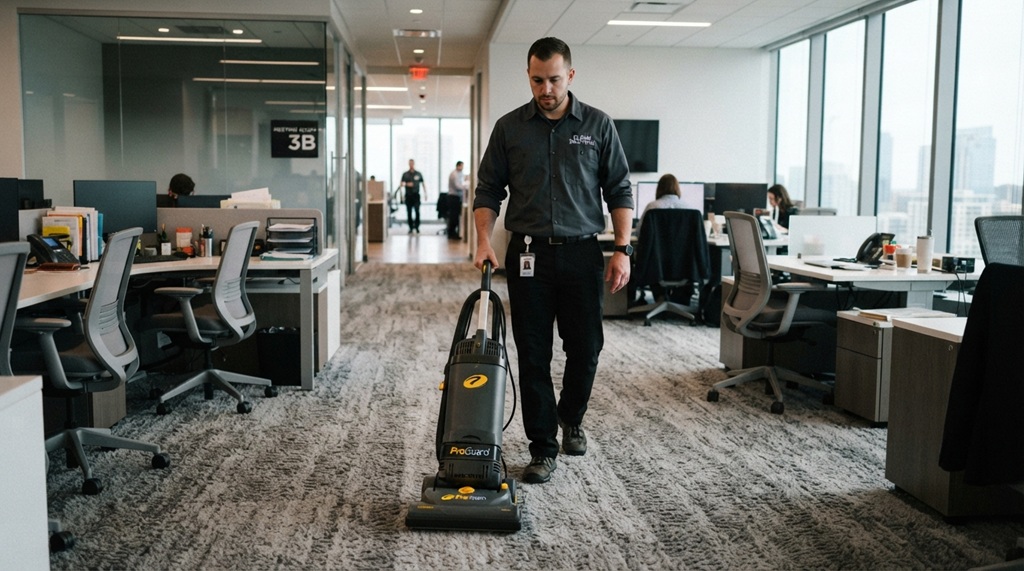
Not all commercial vacuums are equal. When you’re evaluating options, focus on specific components that directly impact how long the machine will last under daily use. These are the features that separate a five-year investment from a one-year disappointment.
Motor Type and Protection
Look for bypass motors rather than direct-air motors. Bypass motors have a separate cooling fan that pulls clean air over the motor, which prevents fine dust from causing overheating. This matters most in Texas environments, where dust is a constant companion. Additionally, motors rated for continuous duty typically labeled “commercial” or “industrial” can run for hours without resting.
Filter System and Sealing
HEPA filtration isn’t just for allergy sufferers. A well-sealed HEPA system protects the motor from fine particles and keeps suction consistent. So, check whether the vacuum has a sealed intake path from the nozzle to the filter. Otherwise, unsealed systems let dust escape into the motor compartment, which shortens lifespan considerably.
Construction Materials
Metal brush rolls and metal fan blades last significantly longer than plastic alternatives. The housing material matters too polypropylene and ABS plastics handle impact better than cheaper recycled plastics. Therefore, for heavy-use environments, look for models with reinforced bumpers and crush-resistant hoses.
Matching the Right Vacuum to Your Commercial Environment
A heavy-duty machine built for a high-traffic hotel corridor will fail quickly in an industrial mechanic’s shop, just as a retail storefront requires a vastly different filtration system than a children’s daycare center. Tailoring your equipment choice directly to your physical environment is the most effective strategy for maximizing machine longevity and operational efficiency.
Choosing reliable equipment is just as foundational to long-term enterprise durability as steering clear of common missteps; examine the truth behind five business succession planning myths to safeguard your company’s future leadership stability.
Retail and Office Spaces
For carpeted offices and retail floors, a commercial upright with a self-propelled feature reduces operator fatigue and encourages more frequent cleaning. Also, look for models with brush roll shutoffs so you can clean hard floors without wearing down the brush. On top of that, wide cleaning paths 18 inches or more reduce cleaning time, which means less wear per square foot.
Hospitality and Food Service
Hotels and restaurants need vacuums that handle both carpet and hard surfaces, plus occasional wet spills. A commercial canister vacuum with a squeegee attachment offers versatility here. However, for daily use in these environments, the durability of the hose and cord matters most, since these are usually the first parts to fail in hospitality settings.
Warehouses and Industrial Spaces
Large open areas with concrete floors require a different approach. Wide-area vacuums or walk-behind sweepers handle debris faster, but for detailed cleaning, a commercial canister with a floor tool designed for rough surfaces works better. In these environments, look for vacuums with larger recovery tanks and heavier-duty casters that can roll over expansion joints and debris without breaking.
If you’re ready to compare specific models that are proven to hold up in demanding conditions, this guide to long-lasting vacuums for Texas businesses covers budget-friendly options that don’t sacrifice durability.
Common Mistakes That Shorten Vacuum Lifespan
Even a well-built vacuum will fail early if your team misuses it. Understanding the most common mistakes helps you protect your investment and avoid unnecessary replacement costs.
Ignoring Filter Maintenance
A clogged filter forces the motor to work harder, which generates excess heat and reduces airflow. In fact, this is the number one cause of premature motor failure. So, set a schedule for filter cleaning or replacement based on usage, not just when you remember to do it.
Using the Wrong Attachments
A carpet brush used on hard floors throws debris and wears down bristles unnecessarily. Likewise, a hard floor tool used on deep pile carpet damages the tool and reduces cleaning effectiveness. To prevent unnecessary wear on both the vacuum and the floor, match the attachment to the surface.
Overlooking Cord and Hose Care
Running over the cord with the vacuum itself, pulling the machine by the cord, or wrapping it tightly around hooks for storage all cause internal wire breaks over time. Similarly, hoses that get pinched in doors or crushed under equipment develop leaks, which force the motor to work harder for less suction. Training your staff on proper cord and hose handling is a simple step that extends equipment life significantly.
Maintenance Practices That Extend Vacuum Life
Regular maintenance doesn’t require a technician. Instead, simple daily and weekly habits make a measurable difference in how long your vacuum lasts. The key is consistency, not complexity.
Daily Maintenance Checklist
- Empty the dust bag or canister when it’s half full don’t wait until it’s packed
- Check the brush roll for tangled hair, strings, or debris
- Inspect the cord for cuts or exposed wires
- Wipe down the exterior to prevent dust buildup on vents
Weekly Maintenance Checklist
- Clean or replace filters according to manufacturer guidelines
- Check the hose for blockages by looking through it or using a broom handle
- Inspect the brush roll for wear replace it once the bristles look worn
- Check wheels and casters for debris that could cause dragging
When to Call a Professional
If you notice a burning smell, unusual noise, or a drop in suction that doesn’t improve after cleaning the filter, stop using the vacuum right away. Continuing to run a machine with a failing motor can cause more extensive damage. Instead, have a qualified technician service it, rather than attempting repairs yourself unless you have experience with small appliance motors.
Budget vs. Long-Term Value: Making the Right Call
The cheapest vacuum is rarely the most economical choice for a business. Consider this: a $150 consumer vacuum that lasts six months costs more per year than a $500 commercial vacuum that lasts five years. That said, this doesn’t mean you should buy the most expensive option either. Ultimately, the sweet spot is a commercial-grade vacuum with replaceable parts and a reasonable warranty.
Warranty Considerations
Look for warranties that cover the motor for at least three years and the rest of the machine for at least one year. Some manufacturers even offer extended warranties on commercial models. Still, read the fine print, since some warranties exclude commercial use even when a vacuum is marketed as commercial-grade.
Parts Availability
Before purchasing, check whether replacement parts filters, belts, brush rolls, hoses are easy to find. Otherwise, a great warranty won’t help much if you have to wait three weeks for a replacement belt. Brands with established distribution networks in Texas usually have parts available locally or with fast shipping.
Frequently Asked Questions
How long should a commercial vacuum last? A well-maintained commercial vacuum typically lasts 5 to 7 years with regular use. By comparison, consumer-grade vacuums used commercially often fail within 6 to 12 months. The difference comes down to motor quality, construction materials, and how consistently your team performs maintenance.
Is a cordless vacuum suitable for commercial use? Generally, most cordless vacuums aren’t built for continuous commercial use. Battery life limits runtime, and batteries degrade faster under heavy use. So, if you need cordless convenience, choose a model with swappable batteries and buy at least two batteries per machine. Otherwise, for daily commercial cleaning, corded models remain more reliable and longer-lasting.
What is the best type of vacuum for a small business? For small businesses with mixed flooring, a commercial upright with a brush roll shutoff and HEPA filtration offers the best versatility. On the other hand, for businesses with mostly hard floors, a commercial canister vacuum with a hard floor tool provides better durability and easier maneuverability. Either way, match the vacuum to your dominant floor type.
How often should I replace vacuum filters in a commercial setting? HEPA filters in commercial vacuums typically need replacement every 3 to 6 months, depending on usage and dust levels. Pre-motor filters may need cleaning weekly and replacement monthly. Even so, check your vacuum’s manual for specific recommendations, and inspect filters visually if they look discolored or clogged, replace them regardless of the schedule.
Can I repair a commercial vacuum or should I replace it? If the motor still works and the repair cost is less than 50% of a replacement cost, repairing is usually worthwhile. For example, common repairs like replacing belts, brush rolls, or hoses are inexpensive and extend the vacuum’s life significantly. However, if the motor has failed or the chassis has cracked, replacement is typically the better investment.
Conclusion
Finding long-lasting vacuums for Texas businesses comes down to understanding your environment, choosing the right type of machine, and committing to regular maintenance. Prioritize bypass motors, sealed HEPA filtration, and metal components where they matter most. Also, match the vacuum to your floor types and usage patterns rather than reaching for a one-size-fits-all solution. And remember, maintenance not just purchase price determines the true cost of ownership. In the end, a slightly higher upfront investment in a commercial-grade vacuum with available parts and a solid warranty will save you money and frustration over the long run. Start by evaluating your current cleaning routine, identify where your existing equipment falls short, and use the criteria in this guide to make your next purchase count.