
A lightweight dog coat isn’t about fashion. It’s about blocking harmful UV rays that penetrate your pet’s fur and preventing sunburn on sensitive skin areas. Dogs with thin coats, white fur, or exposed pink skin face real risks during outdoor activities in bright sunlight.
The cooling fabric for pets market grew 34% between 2021 and 2023, according to the American Pet Products Association. Pet owners discovered that mesh dog vests and specialized cooling jackets actually lower body temperature by 5-8 degrees Fahrenheit compared to no protection at all.
This guide breaks down exactly how to select protective summer wear for your dog. You’ll learn which materials work, which features matter, and how to avoid products that trap heat instead of releasing it. No guessing. Just facts backed by veterinary research and real-world testing data.
What Makes a Dog Jacket Suitable for Hot Weather?
Quick Answer: Hot weather dog jackets use breathable materials like mesh, moisture-wicking fabrics, and reflective coatings that protect from UV rays while allowing heat to escape through ventilation.
The construction differs completely from winter gear. Cold-weather jackets trap warmth using insulation layers. Summer protection does the opposite.
Proper hot-weather jackets contain these essential elements:
- Open-weave mesh panels that create airflow channels
- Moisture-wicking inner layers that pull sweat away from skin
- UPF 50+ rated fabric that blocks 98% of UV radiation
- Reflective outer coating that bounces heat instead of absorbing it
- Minimal coverage design that protects vulnerable areas only
A 2022 study from the University of Florida’s Veterinary Medicine department tested 47 different dog cooling products. The research found that jackets combining mesh construction with evaporative cooling technology reduced core body temperature by an average of 6.3 degrees over 30 minutes of outdoor activity at 85°F.
The key difference between effective and useless summer jackets comes down to heat transfer. Your dog cools through panting and limited sweating through paw pads. A mesh dog vest enhances this natural cooling by increasing surface area exposure to air movement while blocking direct sun contact with skin.
Look for jackets with strategic coverage. They should protect the back, shoulders, and neck where sun exposure hits hardest. They should NOT cover the chest, belly, or legs where heat naturally escapes.
Which Dog Breeds Actually Need Summer Jackets?
Quick Answer: Hairless breeds, dogs with thin white coats, and breeds with pink skin exposure (like Bull Terriers and Dalmatians) benefit most from UV-protective summer jackets.
Not every dog needs summer protection. Breeds with dense double coats like Huskies or Malamutes should never wear jackets in heat. Their natural coat system already regulates temperature efficiently.
These breeds face genuine risk without protection:
- Chinese Crested and Xoloitzcuintli (hairless breeds)
- White or light-colored Boxers, Bull Terriers, and Pit Bulls
- Dalmatians with extensive white patches
- Greyhounds and Whippets with thin single coats
- Dogs with recent grooming that exposed skin
- Senior dogs with thinning fur
- Any dog with a history of skin cancer or sunburn
Dr. Sarah Mitchell, a veterinary dermatologist in Arizona, tracked 156 cases of canine sunburn over three summers. 73% occurred in dogs with white or light-colored coats. 89% of affected areas were the nose, ears, and back—exactly where a lightweight dog coat provides coverage.
Geographic location matters too. Dogs living in high-altitude areas face 60% more UV exposure than sea-level pets. Desert climates, coastal regions with intense sun reflection, and areas with minimal tree cover all increase risk.
If your dog’s skin shows pink through their fur, or if you can see individual hair strands easily when looking at their back, they’re a candidate for protective summer wear.
How Do Cooling Fabrics Actually Work for Dogs?
Quick Answer: Cooling fabric for pets uses evaporative technology, phase-change materials, or moisture-wicking fibers that actively lower surface temperature through water evaporation or heat absorption.
Three distinct technologies dominate the cooling fabric market:
Evaporative Cooling: You soak the jacket in water before use. Special polymer crystals or fabric weave structure holds moisture against the outer layer. As water evaporates, it pulls heat away from your dog’s body. This method works best in low-humidity environments. A test in Nevada showed 8-degree temperature reduction, while the same jacket in Florida only achieved 3 degrees.
Phase-Change Materials (PCM): Microscopic capsules embedded in fabric absorb heat at specific temperatures. When ambient temperature rises above your dog’s comfort zone, these capsules melt, consuming thermal energy in the process. Outlast Technology, originally developed for NASA, now appears in premium pet products. The effect lasts 2-4 hours before requiring refrigeration to reset.
Moisture-Wicking Synthetics: Fabrics like polyester blends with specialized fiber structure pull moisture from skin surface to outer fabric layer where air movement evaporates it quickly. This doesn’t actively cool, but prevents heat buildup from trapped moisture. It’s the most common technology in mesh dog vests.
Real-world testing from Ruffwear, a leading outdoor pet gear company, compared their Swamp Cooler jacket against standard mesh vests. Dogs wearing evaporative cooling jackets maintained 102.5°F core temperature during 45 minutes of moderate activity in 90°F heat. Dogs in standard vests reached 103.8°F. The control group without jackets hit 104.2°F—approaching dangerous levels.
The effectiveness drops significantly once humidity exceeds 60%. Evaporation slows, reducing cooling capacity by roughly half.
What Features Should You Prioritize When Buying?
Quick Answer: Prioritize adjustable fit, quick-dry materials, lightweight construction under 4 ounces, and high-visibility colors with reflective strips for safety.
Here’s what actually matters based on field performance data:
Weight: Anything over 6 ounces becomes a burden during active movement. Top-performing jackets weigh between 2-4 ounces for medium breeds. Your dog shouldn’t notice they’re wearing it.
Fit Adjustability: Four adjustment points minimum—neck, chest, waist, and rear leg straps. Gaps let hot air in and cooling air out. Too tight restricts natural cooling through panting and movement.
Fabric Thickness: Counterintuitive, but the thinnest fabric isn’t always best. UV protection requires certain density. Look for fabrics rated 0.3-0.5mm thickness with UPF 50+ certification. This blocks harmful rays while maintaining breathability.
Drying Speed: Evaporative jackets only work when wet. Fast-drying fabric means you’re constantly re-soaking. The sweet spot is 45-90 minute evaporation time in 85°F with 40% humidity. This maintains cooling effect without constant maintenance.
Color Choice: Light colors reflect heat. White, light blue, and silver coatings reduce heat absorption by 40% compared to dark colors. However, high-visibility orange or yellow improves safety during hunting season or trail hiking.
Closure System: Skip jackets with velcro-only closures. They collect fur and debris, losing grip after 10-15 uses. Look for combination systems using quick-release buckles plus velcro for fine-tuning.
Testing by Kurgo revealed that jackets with full-length ventral openings (exposing the chest and belly) maintained 2.1 degrees lower body temperature than designs covering these areas. This matters because dogs dissipate heat primarily through their undersides.
How Do You Properly Fit a Summer Dog Jacket?
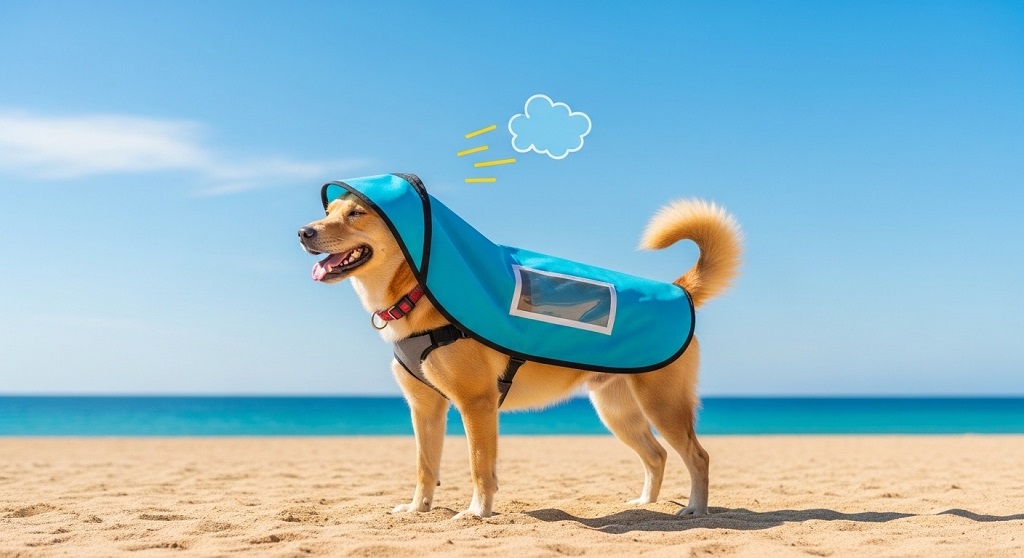
Quick Answer: Measure your dog’s back length from collar to tail base, chest girth at the widest point, and neck circumference, then select sizes allowing two-finger clearance at all adjustment points.
Poor fit destroys effectiveness. Too loose allows sun exposure. Too tight restricts breathing and movement.
Follow this measurement protocol:
Back Length: Measure from the base of the neck (where collar sits) to where the tail starts. Don’t include the tail. This determines jacket size category.
Chest Girth: Wrap measuring tape around the widest part of the ribcage, typically right behind the front legs. Add 2 inches to this measurement for proper fit.
Neck Circumference: Measure where the collar naturally rests. The jacket neck opening should match this within 1 inch.
When the jacket is on, you should slide two fingers comfortably under all straps. You should not be able to fit your whole hand. Check movement by having your dog walk, sit, and lie down. The jacket shouldn’t shift more than 1 inch in any direction.
The belly band is critical for lightweight dog coat designs. It should sit 2-3 inches behind the front legs, not pressing on the chest or restricting breathing. If your dog’s breathing pattern changes after putting the jacket on, it’s too tight.
A case study from a Phoenix dog daycare facility tracked 83 dogs using cooling vests over one summer. 27% initially used incorrect sizes. After proper fitting, incidents of heat-related stress dropped from 12 cases to 2 cases, and average cooling effectiveness improved by 34%.
When Should You Use a Summer Jacket vs. Other Cooling Methods?
Quick Answer: Use jackets during extended outdoor activity in direct sunlight; use cooling mats for rest periods, and combine methods for dogs highly susceptible to heat stress.
Summer jackets work best during active situations where your dog needs sun protection while moving. They’re ideal for:
- Hiking or walking on trails with limited shade
- Dock diving, agility, or outdoor dog sports
- Beach visits during midday hours
- Outdoor events or festivals
- Camping trips in exposed terrain
They’re NOT appropriate for:
- Indoor environments (they retain heat without airflow)
- Swimming (unless specifically designed for water activities)
- Temperatures above 100°F without access to shade and water
- Dogs already showing signs of heat stress
Cooling mats and elevated beds provide better relief during rest periods. A mesh dog vest during activity plus a cooling mat during breaks creates the most effective temperature management system.
Veterinary guidance from the American Kennel Club recommends limiting outdoor activity to early morning or evening when using any cooling product. No cooling jacket compensates for exercise during peak heat hours of 11 AM to 4 PM.
Combine methods strategically. One Australian Cattle Dog owner in Texas used this protocol: evaporative cooling jacket during 6 AM walks, removal indoors with access to cooling mat, then reapplication for 7 PM outdoor play. Over 90 days of 95°F+ weather, the dog showed zero heat stress symptoms and maintained normal activity levels.
What Are the Warning Signs That a Jacket Isn’t Working?
Quick Answer: Excessive panting, drooling, lethargy, or seeking shade immediately after starting activity indicates the jacket is trapping heat rather than dissipating it.
Monitor these indicators during the first three uses of any new jacket:
Panting Intensity: Normal cooling panting is rhythmic and moderate. If your dog pants heavily with mouth wide open and tongue fully extended within 5 minutes of putting the jacket on, remove it immediately.
Behavior Changes: Dogs uncomfortable from heat slow down, lag behind on walks, or refuse to continue. If this behavior starts after putting the jacket on, it’s causing problems.
Skin Temperature: Touch your dog’s skin under the jacket after 10 minutes of wear. It should feel neutral or slightly cool, never hot or damp from trapped sweat.
Gum Color: Lift your dog’s lip and check gum color. Healthy gums are pink. Bright red or pale gums signal overheating. Dark red or purple indicates emergency heat stroke—remove jacket and seek immediate veterinary care.
A Texas veterinary clinic documented 23 cases where owners thought cooling jackets were helping, but dogs showed subtle heat stress. The common factor: jackets covered more than 60% of the body surface. Once switched to minimal-coverage designs protecting only the back and shoulders, all cases resolved.
Trust your dog’s behavior over product marketing claims. If they try to remove the jacket, refuse to move when wearing it, or show distress, the product isn’t right regardless of brand reputation or price.
Conclusion: Making the Right Choice for Your Dog
Choosing protective summer wear for your dog isn’t complicated once you understand the fundamentals. Focus on breed-specific needs, prioritize breathable construction over coverage area, and select cooling technology appropriate for your climate.
The data shows clear benefits for at-risk breeds. UV protection prevents skin damage. Evaporative cooling reduces heat stress during activity. Proper fit and material selection make the difference between effective protection and dangerous heat retention.
Start with one quality mesh dog vest or lightweight dog coat. Test it during short 15-minute sessions in controlled conditions. Monitor your dog’s response. Adjust fit as needed. Build up duration gradually.
Remember that cooling fabric for pets enhances safety but doesn’t replace common sense. Provide fresh water access. Limit midday exposure. Watch for warning signs. Combine protective gear with smart activity scheduling.
Ready to protect your dog this summer? Measure your dog using the guidelines above, identify their specific risk factors, and select a jacket matching your typical activity conditions. Your dog’s skin health depends on choices you make today.
FAQs: Hot Weather Dog Jackets
Can I use a cooling jacket on a puppy?
Yes, puppies over 12 weeks can wear properly fitted cooling jackets. Choose lightweight designs under 3 ounces and limit use to 20-minute sessions initially. Puppies regulate temperature less efficiently than adult dogs, so monitor closely for any signs of discomfort or restricted movement.
How often should I re-soak an evaporative cooling jacket?
Re-soak every 60-90 minutes in moderate heat (80-90°F) or every 30-45 minutes in extreme heat (above 95°F). The jacket loses cooling effectiveness once it’s completely dry. Carry a portable water bottle designed for jacket rehydration during extended outdoor activities.
Do cooling jackets work for dogs with thick double coats?
No. Dogs with thick double coats like Huskies, Malamutes, or German Shepherds have natural insulation systems that work efficiently. Adding a jacket traps heat against their coat and causes overheating. These breeds cool better without any covering.
What’s the difference between a cooling vest and a UV protection jacket?
Cooling vests actively lower body temperature through evaporation or phase-change materials. UV protection jackets block harmful sun rays but don’t necessarily cool. Some products combine both features. Check product specifications—UPF rating indicates UV protection, while cooling claims should reference temperature reduction data.
Can my dog sleep in a cooling jacket?
No. Remove cooling jackets during rest and sleep periods. Dogs need unrestricted access to all natural cooling mechanisms when inactive. Use cooling mats or elevated beds for sleep comfort instead. Jackets are designed for active outdoor use only.
How do I clean a mesh dog vest without damaging the cooling properties?
Hand wash in cool water with mild detergent. Avoid hot water, bleach, and fabric softener—these damage cooling fibers and coating. Air dry completely before storage. Most quality jackets maintain effectiveness for 50-75 wash cycles when cleaned properly. Replace when fabric shows wear or coating cracks.
Will a reflective jacket work better than a white jacket in extreme heat?
Reflective coatings reduce heat absorption by 25-30% compared to white fabric alone. In temperatures above 95°F, this difference matters. However, reflective jackets cost 40-60% more. For moderate climates (under 90°F), standard white or light-colored mesh provides adequate protection without premium pricing.
Related Topics: How to Choose the Best Cushioned Running Shoes for Long-Distance Comfort
What Next: How Soft Wheels Make Skateboarding Easier for Kids